

Is The Toyota Corolla Reliable? Learn About Common Corolla Problems Here.

The Toyota Corolla is renowned for its build quality and dependability. Loyal Corolla owners tend to depend on their cars for daily driving and often drive their Corollas for several hundred thousand miles. In fact, Toyota fans may remember that Toyota's model line includes a sedan named the Crown. The Corolla follows suit in this naming tradition as the word Corolla is Latin for "small crown."
As with any vehicle, there can be some common issues you might encounter if you own a Toyota Corolla. Read on to learn about known issues reported by Corolla owners, and how to address them.
Excessive Oil Consumption
Excessive oil consumption is a common issue with 2009-2011 Toyota Corollas equipped with the 2AZ four-cylinder engine. Toyota installed defective pistons and piston rings during engine manufacturing, resulting in carbonized piston rings and excessive oil blow-by over time. When carbon gradually builds up on the piston rings, they can no longer effectively seal against the cylinder walls, resulting in excessive oil consumption. Toyota noted:
"Certain 2AZ-FE engines may exhibit engine oil consumption. The piston assembly has been changed to minimize oil consumption."
- Toyota Motor Sales USA
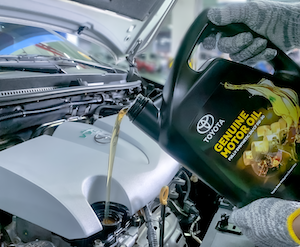
Toyota first issued a technical service bulletin in 2011 to address the oil consumption problem. While the powertrain warranty typically covers the engine for six years or 60,000 miles, oil consumption would often only become apparent after the factory warranty expired. Owners would eventually file a class action lawsuit as complaints of excessive oil consumption mounted. After some resistance, Toyota finally authorized a warranty enhancement program for all affected Toyota models equipped with the 2AZ engine. The warranty enhancement extended coverage of related engine repairs, regardless of mileage, until October 2016. Following this expiration date, a secondary coverage was applicable for ten years or 150,000 miles from the date of first ownership, whichever came first. The warranty enhancement offered:
"Toyota owners will be advised that if they believe their vehicle has excessive engine oil consumption, they can contact an authorized Toyota dealer to have the engine oil consumption test performed to determine if they will be eligible for future part replacement."
- Toyota Motor Sales USA
Lack of scheduled maintenance can cause any engine to burn oil eventually. See our video guide to Toyota oil changes or our review of oil testing and oil colors for a few tips on oil maintenance. If you perform your own oil changes, we have the correct OEM oil filter for your specific Toyota vehicle - check out our selection here.
EVAP System Errors
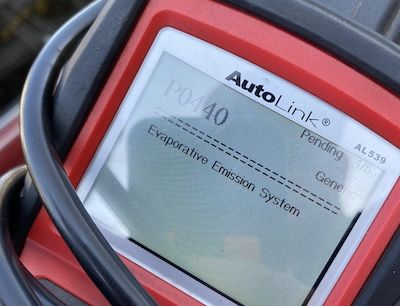
Toyota Corollas may experience a check engine light caused by the evaporative emission control (EVAP) system issues. The EVAP system captures gasoline fumes and prevents them from leaking into the atmosphere. When an EVAP fault is detected, the engine control module (ECM) stores a diagnostic trouble code (DTC). Most common on 1998 to 2016 model-year Corollas, EVAP issues typically appear at higher mileage. EVAP system faults can be difficult to diagnose. On Toyota Corollas, the most likely cause is either a loose or worn fuel tank cap or a charcoal canister failure. Not tightening the cap enough can set an EVAP DTC. Otherwise, the fuel tank cap may need replacing due to a worn or deteriorated seal. The charcoal canister can also develop cracks or become clogged with age and higher mileage.
Automatic Transmission Improper Shifting
High-mileage Toyota Corollas can experience erratic gear shifts. This problem commonly occurs on 2016 and older Corolla models due to either a faulty throttle position sensor or malfunctioning shift solenoid:
Throttle Position Sensor
The engine control module (ECM) monitors the throttle position sensor (TPS) to determine the position of the accelerator pedal. The ECM uses this data to maintain the correct engine air and fuel mixture under all driving conditions.
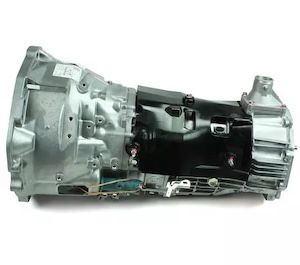
The data is also shared with the transmission control module (TCM) to calculate when to upshift and downshift between gears within the automatic transmission. Transmission shifts have been known to be harsh or erratic if the TPS data is faulty or missing. Additionally, a throttle position sensor malfunction will usually cause the check engine light to illuminate with the applicable DTCs stored in the ECM.
Shift Solenoid
A shift solenoid regulates the flow of transmission fluid to provide smooth and precise gear shifts. The transmission control module (TCM) monitors vehicle speed and engine RPM to determine when to shift the transmission. A faulty shift solenoid can cause several symptoms, including:
- Harsh or erratic shifts
- Transmission slippage
- Transmission stuck in neutral
- Limp mode with limited vehicle speed
Shift solenoid malfunctions usually illuminate the check engine light with DTCs stored in the TCM. Shift solenoids often fail with age or high mileage. Dirty transmission fluid and lack of recommended maintenance can cause shift solenoids to fail prematurely.
ECM or TCM software updates may resolve some transmission shifting or hesitation issues. Scheduled maintenance ensures proper transmission performance and improves the longevity of internal transmission parts.
Problematic Mass Air Flow (MAF) Sensors
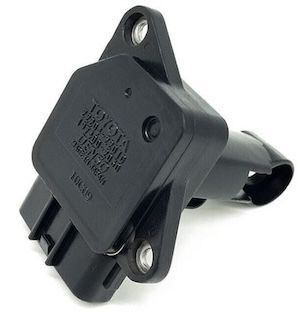
Toyota Corollas with high mileage can experience issues with the mass air flow sensor (MAF). The problem is most common in 2010 and older Corollas. MAF sensor failure can cause one or more of the following symptoms:
- Check Engine Light
- Hard Start Or No Start
- Stalling
- Rough Idle
- Loss Of Power
- Poor Fuel Economy
The most common cause of MAF sensor failure in Toyota Corollas is a buildup of dirt and grime on the sensor over time. Using a poor-quality engine air filter or installing an aftermarket cold-air intake can also contribute to the issue. Correcting the problem can be as easy as cleaning the sensor with a specific MAF sensor cleaner. Otherwise, replacing the MAF sensor may be the only fix. Learn more in our Mass Air Flow Sensor Buyer’s Guide.
No Crank/Starter Problems
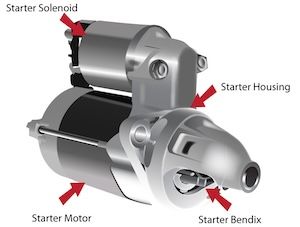
2015 and older Toyota Corollas with high mileage can ocassionally be prone to starter problems. The cause can most likely be traced to the starter solenoid or the starter motor. Owners with this issue reported that the starter solenoid may click when turning the key, but the engine will not start.
The starter motor might also whine when the starter pinion gear does not engage with the flywheel to start the engine. Generally, the causes of starting problems can include:
- Worn Starter Parts
- Loose or Corroded Battery Cables
- Bad Starter Relay
- Battery Charging or Corrosion Issues
We offer a wide selection of starting system parts for your Toyota Corolla. Learn more in our blog posts on how to diagnose a failing starter and how to replace a starter motor.
Corolla Resources And Parts From Olathe Toyota Parts Center

At Olathe Toyota Parts Center, we have a large selection of parts and accessories for your Toyota vehicle. We're centrally located in Kansas City and provide fast shipping from coast to coast. We offer many Toyota Corolla resources online, including:
- A Selection of Corolla DIY Maintenance Kits
- Discover Interesting Toyota Corolla Facts
- Learn more about other Toyota Corolla Problems and Common Complaints.
- A Corolla Oil Change Guide
- A review of the 50 Year History of the Corolla
The Corolla is one of Toyota’s longest-running models in production today. If you need Corolla parts, we have a vast selection ready to ship. All OEM Toyota parts are backed by the standard Toyota 12-month, unlimited miles warranty. We've also got helpful online resources like free downloadable owners manuals and a guide to Toyota engines. Do you have questions? We’re here to help. Please feel free to contact us today!