

Is The Toyota RAV4 Reliable? Common RAV4 Problems Explained.
Toyota is known for building solid and reliable vehicles, and the RAV4 is no exception. It’s credited with being the first-ever compact crossover SUV and has been a popular model since its introduction in 1994. There are currently five generations of the RAV4. If you'd like a rundown of its changes over time, check out: The Evolution of the Toyota RAV4. RAV4 generations are defined as:

- 1st Generation 1995-2000
- 2nd Generation 2001-2005
- 3rd Generation 2006-2012
- 4th Generation 2013-2018
- 5th Generation 2019-on
Even the most reliable Toyota vehicles can have some issues. Below we'll investigate the five most common problems with the Toyota RAV4. For this article, you should know that problems that occur in one generation generally do not occur in the next generation.
1. Transmission Issues
The RAV4 has been available with several transmission types over the years. Early models were available with manual and automatic gearboxes, but newer RAV4’s are predominantly fitted with Continuously Variable Transmissions (CVT). Problems experiences by owners included:
- Automatic transmissions shift incorrectly
- Usually occurs at higher mileages (125,000-miles+)
- 1996-2008 model years most affected
Most perform faultlessly for years, but on some earlier cars, the automatic transmissions can start to shift erratically. Common symptoms of this condition include:
- Holding onto gears too long
- Not shifting down when required
- Won’t engage certain gears
- Banging, clunking, or lurching when shifting gears
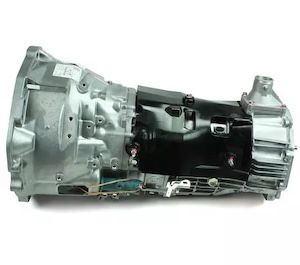
The fault is not always with the gearbox itself, as a faulty throttle position sensor or a damaged shift solenoid can sometimes cause this issue. Toyota issued a TSB on ths issue in 2019 - you can find it on the NHTSA site here. The Throttle Position Sensor (TPS) checks the position of the throttle and relays this information to the Engine Control Module (ECM). If the TPS is faulty, the transmission may select the wrong gear or not shift at all. In some cases, the ECM itself may be faulty, but this would also impact other vehicle functions.
The shift solenoids control the rate that fluid flows through the transmission. If they fail or wear out, the fluid flow rate won’t be appropriate for the desired gear to be engaged.
If your RAV4 is exhibiting the symptoms above, an OBDII diagnostic tool can help to narrow down the problem. It will also help reduce the probability of replacing the incorrect components. You can find RAV4 transmission parts here:
- RAV4 Transmissions
- RAV4 Automatic Transmission Solenoids
- RAV4 Automatic Transmission Gear Position Sensors
2. Excessive Oil Consumption
Newer cars tend to use little to no oil between oil changes. But it’s quite normal for an engine to use a little oil at higher mileage. What isn’t normal is when you are topping up the oil every few hundred miles. This was addressed in Toyota's TSB here and was noted to occur mostly in 2004-2008 model years (but can occur on any RAV4) and commonly occurs around 100,000 miles and up. According to Toyota:
"Certain 2AZ-FE engines may exhibit engine oil consumption. The piston assembly has been changed to minimize oil consumption."
- Toyota Motor Sales USA
If you start noticing smoking from the exhaust when accelerating, it may also be an oil consumption issue. Excessive oil consumption can occur from deferred servicing, eventually resulting in worn engine components. Common symptoms of abnormal oil consumption include:
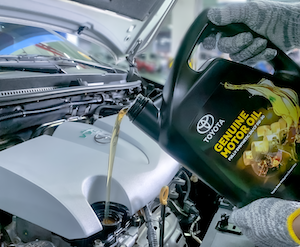
- Engine needs constant top-ups between oil services
- Engine warning light illuminates
- Smoking exhaust under acceleration
Toyota recommends oil change intervals of 10,000 miles/12 months for vehicles using synthetic oil and every 5,000 miles/6 months for vehicles using mineral oils. Most RAV4s use synthetic oils, but check your handbook to be sure.
Infrequent oil changes can result in excessive engine sludge, blocked oil filters, and premature engine wear. It’s best to change engine oil at the recommended intervals to avoid long-term issues. If the above mentioned symptoms persist after the oil change, then the piston rings may be worn. This will require an engine rebuild to cure.
If you aren’t sure when the oil was last changed on your vehicle, the color of the oil can tell you a lot. Very dark oil can indicate that an oil change is overdue. Creamy or frothy oil may be because of coolant contamination. Read our guide here for more information.
If you want to learn more about your engine and whether there are excessive contaminants in the oil, then you can also conduct an oil analysis.
While owners of 2004-2008 MY RAV4s complained most about this issue, it can affect any Toyota model that has not been serviced regularly. Olathe Toyota offers genuine Toyota parts at wholesale prices, saving you time and money. Check out our article on how to perform your own oil change and our oil filter buyer’s guide, and find your RAV4 oil related parts here:
3. Software Falsely Reporting Catalytic Converter Failure
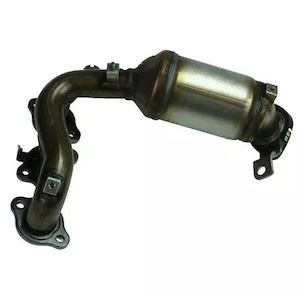
Every vehicle sold in the US since 1975 must have a catalytic converter fitted to its exhaust system. It filters out and converts harmful compounds from the combustion process into safer gases.
To achieve this, the catalytic converter has a metal honeycomb structure containing precious metals like palladium and platinum. This makes it an expensive component and one that is often prone to theft.
Seeing a dashboard warning light telling you there is a problem with it can be worrying. This has been the case with some older RAV4 models, but the problem for many was actually caused by faulty software. Owners reported:
- The check engine light illuminates due to the system incorrectly diagnosing cat issues
- The issue most commonly occurs on model years: 1996, 2001, 2002, 2003, 2004, 2005, 2007
Toyota implemented a software update to resolve this issue, so if you own a RAV4 built during this period, it’s a good idea to check if your car had the fix implemented.
In some cases, the catalytic converter itself may be damaged; this can happen when an improper fuel mixture or faulty oxygen sensor causes the cat to overheat. Other common symptoms include:
- Poor performance
- Trouble starting
- Sulfur smell from exhaust
- Poor fuel economy
The average life of a catalytic converter is around ten years or 100,000 miles. Regular long drives at steady speeds can extend this figure. Short trips around town will more easily clog up the cats. It’s best to have your dealer check the condition of the catalytic converter after 50,000 miles just to be sure that it is functioning normally. Find your RAV4 catalytic parts here:
4. Frequent O2 Sensor Failure
The O2 sensor keeps track of the oxygen levels in the exhaust. It sends this information to the Engine Control Module (ECM), which adjusts the fuel/air mixture to meet predetermined settings. If the sensor fails, it will send incorrect information to the ECM. Common symptoms of this problem among RAV4 owners include:
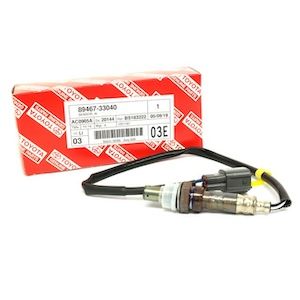
- Poor fuel economy
- Hesitation under acceleration
- High emissions – usually picked up during an emissions test
- Check engine light illuminates due to faulty O2 sensor
- It can occur on any model year – usually at higher mileage
The O2 sensor on most RAV4 models is plugged into the exhaust pipe next to the catalytic converter. If the check engine light illuminates, you should run an OBDII diagnostic test to see whether the O2 sensor could be at fault. Read our comprehensive guide on how to diagnose your O2 sensor here.
While a failing O2 sensor can be frustrating, it is an easy part to replace, and buying it at wholesale prices from Olathe Toyota will save you money, too. Find your RAV4 O2 sensor parts below:
5. EVAP System Errors
The Evaporative Emission System (EVAP) in your RAV4 is designed to prevent harmful gasoline fumes from entering the atmosphere. It forms part of the fuel system and stores harmful gases in the EVAP canister until they can be purged into the combustion process and burnt off. If you have a 1998, 2002, 2005, 2011, or 2013 model year RAV4 you may have had to deal with a check engine light that illuminates due to EVAP faults.
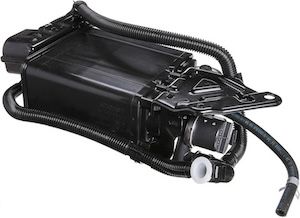
Depending on the year of your RAV4, the EVAP system is comprised several parts that typically include the fuel tank, EVAP canister, fuel tank pressure sensor, and gas cap.
A leak or malfunction in any of these parts will be picked up by the Engine Control Module (ECM), which will result in the check engine light illuminating. Some common symptoms that may be experienced as a result of this issue can include:
- Higher emissions - vehicle may fail emissions tests
- Reduced performance
The EVAP system should function without issue for years. If your check engine light illuminates, it is always recommended to run an OBDII diagnostic test to narrow down the issue. If you see P0441, P0442, P0455, or P0456 error codes, then you may have an EVAP system leak.
While the EVAP canister may be at fault, it could also be a leaking gas cap, a damaged fuel pump pressure sensor, or another part of the fuel system. It’s best to have a specialist diagnose the vehicle if you aren’t sure where the problem lies. Yo can find your RAV4 fuel system parts below:
- RAV4 Fuel Filters
- RAV4 Fuel Injectors
- RAV4 Fuel Pumps
- RAV4 Evaporative Emissions System Leak Detection Pump
RAV4 NHTSA Recalls
While most of the above issues will announce themselves with the illumination of the check engine light and poor vehicle performance, other problems may go completely unnoticed. This is where the National Highway Traffic Safety Administration (NHTSA) comes in.
It investigates potential safety defects in vehicles and gets the manufacturer to issue a recall if many vehicles are affected. These range from minor problems that can be resolved at the next service or major ones that require the car to be taken to a dealer as soon as possible. Three key NHTSA recalls RAV4 owners should be aware of include:
1. Power Window Related Recall
- Recall Date: 2012
- Total Vehicles Affected: 7.4 million (globally)
- RAV4 Models Affected: 2007-2009
- Reason: Power window glitch that could potentially cause a fire
2. Seat Belt Related Recall
- Recall Date: 2016
- Total Vehicles Affected: 1.1 million (globally)
- RAV4 Models Affected: 2012-2014 RAV4 EV
- Reason: In the event of a frontal collision, the rear seat belts for the outboard seats may be cut by the seat cushion frame
3. Fuel Pump Related Recall
- Recall Date: 2020
- Total Vehicles Affected: 1.52 million (globally)
- RAV4 Models Affected: 2019-2020 RAV4
- Reason: The low-pressure fuel pump inside the fuel tank may fail. More specifically,
"If the fuel pump fails, the engine can stall while driving, increasing the risk of a crash."
- Toyota Motor Sales USA
If your RAV4 was built during one of the periods mentioned above, it’s always a good idea to contact your dealer to ensure that the remedial work was done. There are also two non-RAV4-specific recalls to be aware of:
Floor Mat Related Recall
- Toyota recalled millions of vehicles globally because of ‘unintended acceleration’ claims. While much of this came down to driver error and obstructive floor mats, some vehicles did have sticky accelerator pedals that were replaced. So, it is still worth checking whether your vehicle needs any remedial work at a dealership.
Air Bag Related Recall
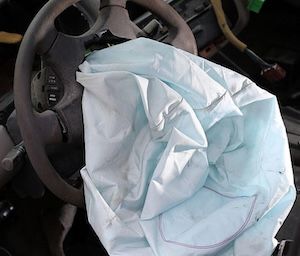
- Close to 70 million vehicles equipped with Takata brand airbags have been recalled by dozens of manufacturers over the years; your RAV4 may be one of them.
You can check any previous or existing recalls specific to your vehicle by typing its Vehicle Identification Number (VIN) on the NHTSA website.
RAV4 Technical Service Bulletins
When the manufacturer discovers a potential issue with one of its models that does not warrant a recall, it may issue a Technical Service Bulletin (TSB) to its dealers. This will detail a repair or software update that will need to be carried out when the affected vehicles are next in for a service.
You can check if there are any outstanding TSBs on your vehicle here.
RAV4 Resources And Parts From Olathe Toyota Parts Center
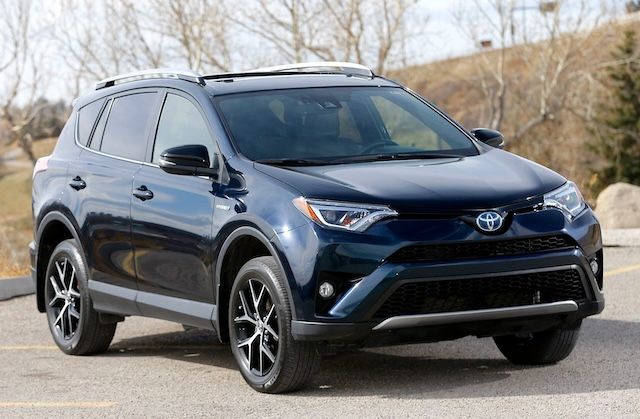
The RAV4 is a great compact SUV that can provide years of reliable service. To ensure that it performs as the manufacturer intended, only use OEM replacement parts. At Toyota Parts Center we have a large selection of online resources for your RAV4:
- A guide to common RAV4 Problems, TSBs and complaints
- A selection of RAV4 DIY maintenance kits
- A RAV4 history and evolution rundown - including a close look at EV RAV4 models
- A RAV4 liftgate conversion guide
- OEM RAV4 Toyota parts and accessories
For all your genuine OEM Toyota RAV4 parts, Olathe Toyota Parts Center has you covered. As part of a Toyota dealership centrally located in Kansas City, we carry a huge supply of parts. We back every part we sell with a manufacturer warranty. And we ship quickly to both the east and west coasts.
With over 15 years in business and helpful online tools like our VIN decoder, our team is ready to help with whatever your RAV4 needs. You can also contact us here if you have any questions.