

Is The Toyota Highlander Reliable? Learn About Common Highlander Problems Here.
The Toyota Highlander has a loyal following, and for good reason. It's a dependable ride that offers plenty of room for adventuring or family travel. Most Highlander owners keep their SUV well past the 100k mile mark. But, like any automobile, there are particular things that may need repair or attention. If you are Highlander owner now, or are thinking of becoming one, these are the common issues you should know about.
1. Oil Leaks And Loss Of Oil Pressure
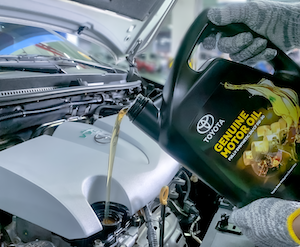
Lubrication systems are essential for proper engine function. If you are an owner that prefers DIY maintenance, you're familiar with motor oil as well as engine air filters, cabin air filters, and oil filters. For some 2005-2013 Toyota Highlanders equipped with the 3.5 liter 2GR-FE V6 engine with variable valve timing (VVT-i), you may experience a significant oil leak with a sudden drop in oil pressure. Toyota described the problem as:
...vehicles [that] can experience an oil leak or seepage from a leaking or seeping engine oil cooler pipe.
- Toyota Motor Sales USA
A ruptured rubber hose that feeds the VVT-i lubrication system can cause a rapid loss of engine oil. The abrupt loss of pressure and oil starvation can lead to catastrophic internal engine damage. The 2GR-FE V6 has thin cylinder liners cast into the engine block. Once damage occurs, the cylinder liners cannot be bored, requiring replacement of the entire engine block.
Engineers addressed the oil leak by replacing the rubber oil supply hose with a metal pipe. While the factory warranty covered the oil line for three years or 36,000 miles, the failure rate was significant enough for Toyota to issue a warranty enhancement program in 2014 for all affected models equipped with a 2GR-FE V6 engine. The extended warranty coverage paid for engine repairs, regardless of mileage, until January 31, 2016. After that, secondary coverage was applicable for ten years or 150,000 miles from the date of first ownership, whichever came first.
On the subject of oil maintenance, did you know that the color of your engine oil can shine a light on the health of your Toyota engine? Learn more in our Engine Oil Discoloration Guide - What Different Oil Colors Represent.
2. Malfunctioning Oxygen Sensor
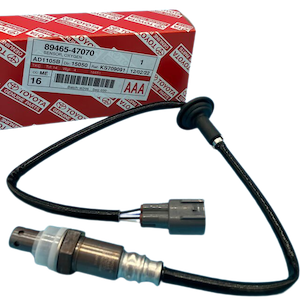
Toyota Highlanders with high mileage may encounter issues related to the O2 sensors. This problem is most prevalent in 2010 and earlier Highlander models. Oxygen sensor failure can cause one or more of the following symptoms:
- Check Engine Light Illumination
- Rough Running
- Loss of Power or Acceleration
- Reduced Fuel Economy
- Failed Emissions Test
The oxygen sensor plays a crucial role in maintaining the correct air-to-fuel ratio for optimal engine combustion under various driving conditions. The primary cause of oxygen sensor failure is contamination from unburned fuel or oil blow-by. An oxygen sensor must be replaced once it is contaminated. Toyota Highlanders have two or more oxygen sensors depending on the engine specifications. For further information, see our Ultimate Toyota Oxygen Sensor Buyer's Guide.
3. Air Filter Housing Hose Disconnect
Your Toyota has several filters, and two of the most important are the cabin and engine air filters (learn about their differences here). Some 2011 and older Toyota Highlanders may show the check engine light after servicing the engine air filter. The air filter cover has a vacuum hose that may fall off when removing the air filter cover. The hose can fall down out of sight and go unnoticed when reinstalling the air filter housing cover.
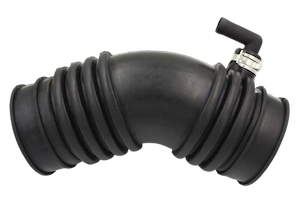
As part of the emissions system, the disconnected hose may cause hesitation, rough idle, or stalling. Depending on the age of the vehicle, the hose nipple may become brittle and break away from the air filter cover along with the hose. It’s important to inspect this hose and ensure it stays connected when replacing the air filter. For helpful tips on air filter replacement, refer to our Toyota Engine Air Filter Buyer's Guide.
4. Ignition Coil Failure
High-mileage Toyota Highlanders can be susceptible to engine misfires that in turn will cause the check engine light to illuminate. This problem commonly occurs in 2013 and older Highlander models and can be attributed to a faulty ignition coil. The engine control module (ECM) controls the ignition coils to optimize engine timing and spark control during combustion.
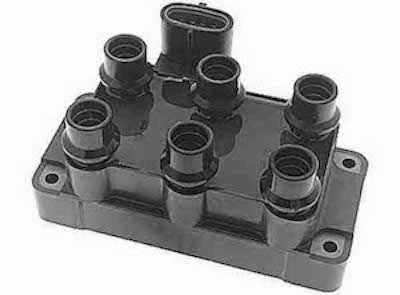
The ignition coils increase the standard 12-volt vehicle voltage to several thousand volts. This resulting high voltage creates an arc across the spark plug gap that is strong enough to ignite the air-fuel mixture in the engine's combustion chamber.
A faulty ignition coil may result in low spark or no spark on the affected cylinder. Once an ignition coil fails, the air and fuel mixture in the affected cylinder doesn't ignite, leading to a misfire. The engine may exhibit several symptoms if experiencing this ignition coil issue, including:
- Check Engine Light Illumination
- Rough Idle
- Loss of Power or Acceleration
- Stalling
To learn more about ignition coils, including diagnosis and replacement, see our Ignition Coil Buyer’s Guide.
5. Airbag Warning Light Due To Problematic Airbag Sensor

Some 2010 and older Toyota Highlanders can be prone to airbag sensor failures. An airbag sensor fault causes the airbag warning light to stay illuminated, indicating a problem with the airbag system. This issue occurs mainly in cold weather, where the sensor performance is affected by very low outside temperatures.
The airbag sensors are critical parts of the safety system designed to detect impacts and deploy the airbags when necessary. Failure of an airbag sensor can result in airbags not deploying during an accident, posing a risk to vehicle occupants. When the airbag light illuminates, the system may become partially or entirely disabled.
In later Highlander models (specifically 2020-2021) Toyota issued an airbag related recall due to:
"...Occupant Classification System (OCS) sensors in the front passenger seat that could have been improperly manufactured, causing a short circuit."
- Toyota Motor Sales USA
A supported diagnostic scan tool can display the specific diagnostic trouble codes (DTCs) stored in the airbag module. If you suspect an issue with an airbag sensor in your Toyota Highlander, have it diagnosed immediately. It's crucial to have the vehicle inspected and repaired by a Toyota dealership or other qualified mechanic as soon as possible.
Genuine OEM Highlander Parts And Resources

Olathe Toyota Parts Center offers a large selection of parts and accessories for your Toyota vehicle. We're centrally located in Kansas City and can provide fast shipping to the east and west coasts. We also offer many Toyota Highlander resources online, including:
- Several Highlander DIY maintenance kits
- A Power To Manual Liftgate Conversion Guide
- Information On Other Highlander Issues
The Highlander is a popular Toyota model with a long production history. If you need Highlander parts, we've got a huge selection ready to ship. All our OEM Toyota parts are backed by the standard Toyota 12-month, unlimited miles warranty. Do you have questions? We’re here to help. Please feel free to contact us today!