

How Does Toyota Start Stop Technology Work?
Stop/start systems were developed to reduce gas consumption and limit harmful exhaust emissions. Toyota was one of the first major manufacturers to offer a basic version of this technology in its 1974 Crown sedan. It took until the early 2010s before this technology became mainstream.
What Are The Benefits Of Start/Stop Technology?
Take a look at FuelEconomy.gov. You will see that identical vehicles with and without this technology differ in efficiency by around 1mpg. While stop/start systems do benefit gas mileage, emissions performance is the most important.
When a vehicle is stopped in traffic or at a red light, it produces zero pollutants when the engine is off. This helps keep the air cleaner in built-up areas and where slow traffic is common. Toyota saw this in its hybrid models and wanted to install the system in its gas-powered vehicles as well.
Explaining The Technology Behind Start/Stop Systems
As the Car Care Nut says, stop/start technology is so complex that it needs to be explained in a simple way. The best way to grasp some of the concepts is to see how each vehicle system has been modified to work with start/stop technology.
“The system is a little bit more than just shut off the starter and then start it again,”
- Car Care Nut
Starter Motor
The starter motor features a tandem starter design. This involves two solenoids that work together to start the motor smoothly from cold, and from an ‘almost off’ situation. This allows for a very quick restart.
This more complex starter motor design also pulls the largest load from the battery than any other system.
Battery Design
A normal battery can have its voltage drop too low for the starter motor to function properly. A new battery had to be specified that could hold a high voltage under big loads.
A boost converter, essentially a large capacitor, helps stabilize voltage levels. Protecting the battery from draining too quickly.
If a normal battery is fitted by mistake, the computer will use an amp sensor to alter the stop/start parameters. It will try to keep the voltages at the correct levels.
Heater
A heater works from the warm coolant that runs through the engine. This needs the mechanical water pump to be constantly on. In a start/stop vehicle an electric water pump is added. It turns on when the interior temperatures are too low, and the engine is in an off state.
A/C
The air-conditioner system needs a compressor to cool the refrigerant in the pipes. Higher pressures increase refrigerant temperatures, while lower pressures do the opposite. When the car is switched off, this process stops immediately. To help the A/C keep some of its cooling ability when the car is off, Toyota fitted special plates inside the evaporator.
“It (the evaporator) will be able to sustain the A/C operation while the engine is off. That one is brilliant.”
- Car Care Nut
Automatic Transmissions
In an automatic gearbox, hydraulic pressure is needed for it to operate. To ensure proper operation when the car is off, an electric oil pump was integrated into the transmission. This ensures that the clutch plate can engage the appropriate gear as soon as power is needed again.
Brakes
A modern braking system uses a brake booster to aid brake pressure. The vacuum pressure inside the booster drops to zero when the engine is turned off. There is usually enough pressure to apply the brakes once or twice. A vacuum sensor is added to check the pressure levels. If it is too low, the engine is started immediately.
Electronic Upgrades
To aid in a quick restart, the Electronic Control Unit (ECU) monitors the position of the crankshaft position sensor (CPS) and other engine parameters. This allows for a far quicker response from the engine.
The computer also goes through a variety of tests before it enables the start/stop system. These include:
- Coolant temperature
- Transmission temperature
- Battery temperature and voltage status
- Door position and seat belt status – this determines whether the car is in a garage, at a stop street, or coasting to a stop
- HVAC – current demands on heating and cooling system
- Ambient temperatures - If it is below 23 degrees Fahrenheit, the system cannot operate reliably
- Warning lights – if there are any issues with the vehicle, the system may not operate
Can You Retrofit Start/Stop Tech?
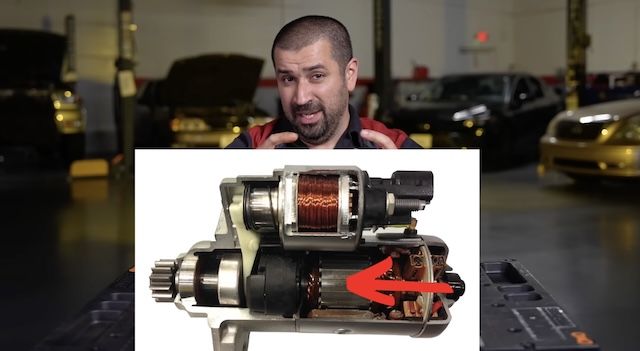
Image Credit: The CarCareNut
No. As you can see from the section above, several mechanical and electrical systems need to be modified and upgraded. Simply turning off your vehicle at every traffic light will put extra strain on the starter motor and battery. It will also render onboard systems like the A/C, power steering, and automatic transmission inoperative.
Does Start/Stop Reduce Reliability?
While the system itself does not reduce reliability, the Car Care Nut does point out that the more complicated starter motor should be replaced before it actually fails. Toyota claims that an OEM starter motor is good for 384,000 stop/start cycles. Once this figure is reached, the start/stop system is disabled until the starter is replaced and the counter is reset.
If you drive 20,000 miles a year, that equates to around 10 years of driving. A regular starter motor lasts that long in most cases; however, the ones used in a start/stop system are more expensive.
The battery is also a more complex and expensive unit. While you can use a regular battery, it will limit the effectiveness of the start/stop system.
Can Start/Stop Damage Your Engine?
According to the Car Care Nut, this system cannot damage the engine. The computer constantly monitors the parameters mentioned above. It will not let the start/stop function if the engine is not warmed up or if any other system does not meet the preset requirements.
Can Start/Stop Be Disabled Permanently?
“The number one question that everyone asks,”
- Car Care Nut
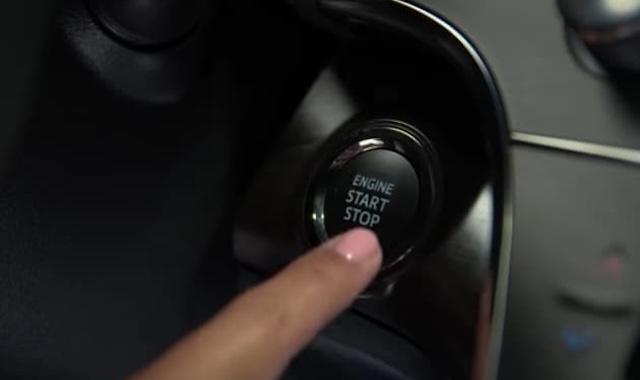
Being an emissions device means that the start/stop system should not be tampered with. It can be turned off via the dashboard button but will be on by default the next time you get in to drive the car. While it is technically possible to do so, you should never attempt to permanently disable the system.
Olathe Parts Center Has The Perfect OEM Components For Your Toyota
The Car Care Nut always recommends OEM replacement parts. Using aftermarket components can cause damage to your vehicle. For all your genuine OEM Toyota and TRD Performance parts, Olathe Toyota Parts Center has you covered. We stock a wide range of starter motors, alternators, and starter solenoids.
As part of a Toyota dealership centrally located in Kansas City, we carry a huge supply of parts. We back every part we sell with a manufacturer warranty. We ship quickly to both the East and West Coasts. Use our free online VIN lookup to be sure you're ordering the right suspension components - and order today.