

Top Toyota DIY Auto Maintenance Tasks
We checked in with our favorite Toyota expert, The Car Care Nut, to learn a little more about Toyota DIY maintenance. In the video below he used his 2023 Lexus GX460 as the guinea pig as he broke down this comprehensive Toyota routine service checklist.
Read on to get a breakdown on the individual jobs to guide Toyota DIYers who are keen to tackle these jobs at home.
Cabin Air Filter Replacement
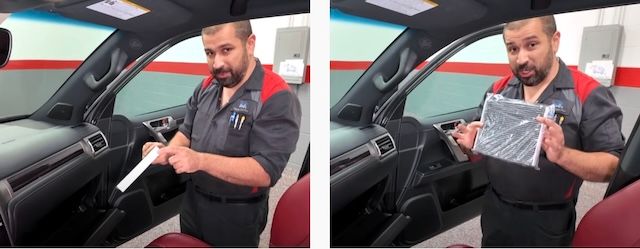
Image Credit: The CarCareNut
Cabin filters should be replaced annually, especially in dusty environments. Most are accessible from within the car in the glovebox or footwell and can be replaced in minutes. Install them with the arrow facing the direction of airflow, and remember to check for leaves inside the Toyota air filter change cavity first.
Car Care Nut Tip: Charcoal-activated cabin air filters come in a plastic bag, and they last only one year.
Wiper Replacement
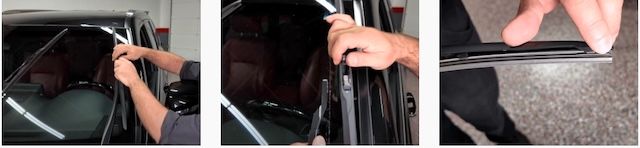
Image Credit: The Car Care Nut
OEM wiper blades are far better quality than aftermarket parts, so always go with original Toyota replacements.
- Unclip the wiper blade from the wiper arm, and make sure the arm rests against the glass.
- Slide the wiper rubber off and remove the metal rods from either side.
- Insert the metal rods in the new blade and slide it back on the wiper mechanism. The larger wiper blade is usually on the driver’s side.
Car Care Nut Tip: Move the wipers into the upmost position for easier access to the wiper blades.
Maintenance Resets

Image Credit: The Car Care Nut
Depending on the model of Toyota or Lexus you have, it may have a Toyota maintenance schedule reminder and an oil maintenance reminder.
- The oil maintenance reminder typically comes on every 5,000 miles
- The scheduled maintenance reminder usually comes up every 10,000 miles
Car Care Nut Tip: These settings can be reset from inside the car by scrolling to the appropriate submenus - check your Toyota owners manual for guidance.
Engine Air Filter Replacement
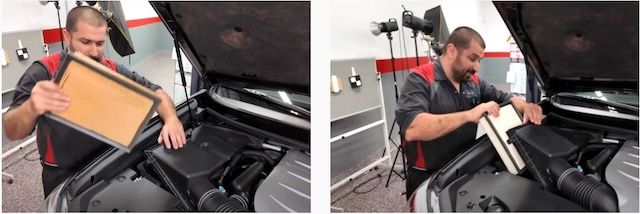
Image Credit: The Car Care Nut
Your Toyota’s engine air filter is housed in a plastic box close to the engine. A set of clips holds the top cover in place, and replacing it takes just a few minutes. The engine air filter only needs replacing when it is visibly dirty, so don't replace the old unit if it is still clean.
Full Under Hood And Under Car Inspection

Image Credit: The Car Care Nut
It's always wise to check under the hood for any potential issues. Look at items like the wiring, fluid levels, piping, and auxiliary fan blades. A coolant level just above the halfway point is normal when the car is cold.
- Top off items like the washer fluid and coolant if necessary.
- Check the oil level and color using the dipstick and compare to this oil color guide.
- Use a test strip or electronic tester to check the quality of the brake fluid. Replace the fluid only if necessary.
Next, use a car lift or jack stands to check underneath the vehicle. Remove any engine covers before inspecting the undercarriage for leaks. Parts and areas to check for leaks, rust, and excessive wear include:
- Water pump
- Suspension bushings
- CV boots
- Shock absorbers
- Hoses
- Exhaust system
- Timing chains, timing belts and pulleys
Car Care Nut Tip: Leave your oil cap next to the hood mechanism, that way you won’t forget to replace it after the service.
Oil And Oil Filter Change
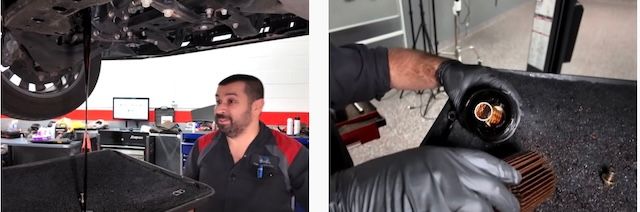
Image Credit: The Car Care Nut
The Car Care Nut recommends your oil and oil filter be changed every 5,000 miles or six months on non-turbo engines. For turbocharged vehicles, the recommended interval is 3,000 miles or 4 months. Allow the oil to drain for a while to ensure that none remains in the pan. Performing a regular DIY oil change can greatly extend engine life.
Car Care Nut Tip: Although your Toyota may perform fine using the 10,000-mile oil change intervals, The Car Care Nut recommends you pamper your engine with shorter intervals.
Brake Service
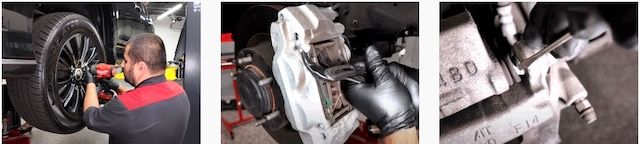
Image Credit: The Car Care Nut
Remove the wheels for best access to the braking system. Use a set of adjustable pliers to see whether the pads move freely and inspect the discs and pads for wear. Finally, check that the rubber covers over the brake bolts are sealed properly.
On sportier Toyota models the brake fluid should be changed every 20,000 to 30,000 miles. For regular cars, use the moisture test (either electronic or test strip) to see whether a fluid change is needed.
Car Care Nut Tip: Remove the retaining pins and use a Scotch-Brite pad (or the like) to remove any excess rust from them. This will help prevent the calipers from seizing
Finishing Up Under Car
Once you have finished inspecting your vehicle make sure to replace all the protective covers and torque the wheel nuts to the correct specifications. Replace the oil filter and the oil pan plug if you haven’t already done so.
Don’t forget to check the condition and pressure of your spare tire. In some Toyotas, it will be secured underneath the trunk or load bed; in other models, it will be inside the trunk under the carpet. Finally, lower the car on the car lift or remove the jacks.
Finishing Up Under The Hood
Once the vehicle has been lowered, fill the car up with oil, fit the oil cap and start the car to let the oil cycle through. Check the oil level and top off if necessary. Close the hood and you are ready to go!
While the Car Care Nut video above focuses on his Lexus GX460, these car maintenance tips apply to all Toyota and Lexus models.
OEM Maintenance Parts From Olathe Toyota Parts Center
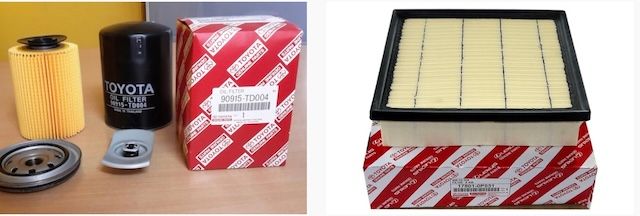
We stock a huge range of OEM service and maintenance parts for many Toyota models. Take advantage of our wholesale prices and use our handy resource center to help find what you need.
All OEM parts are backed by Toyota's 12-month, unlimited miles warranty. Stick to your Toyota maintenance schedule (or better) and use our free VIN lookup tool to ensure you get the right part first time. We also have links to free, downloadable Toyota owner’s manuals from 2000 on. Contact us for more information and order your maintenance items today!