

Is Your Toyota ECU Bad? Check This First.
If your Toyota starts having intermittent electrical issues, stalling without warning, or shifting gears harshly, it’s easy to jump to the most expensive conclusion: a damaged engine or transmission computer. But before you shell out for a replacement, there are a few steps you should take that may help you avoid a faulty diagnosis.
To get the best insight into this technical topic, let's visit with our favorite YouTuber and Toyota expert, The Car Care Nut, for a masterclass on diagnosing the Engine Control Unit (ECU).
Don’t Immediately Blame The Computer
The Car Care Nut emphasizes a "yes and no" approach to ECU failure. If your Toyota is less than five years old, a failed computer is almost unheard of. However, once a vehicle crosses the 10-to-15-year mark, the probability increases - but it should still be your last suspect, not your first. Common issues often mistaken for a bad ECU include:
- Rodent Damage: Chewed wires shorting together can fry internal components.
- Bad Past Repairs: Improperly handled engine swaps or hacked wiring harnesses.
- Worn Mechanical Parts: A slipping transmission or an overheating fuel pump can mimic electronic glitches.
Model-Specific ECU Red Flags
Interestingly, when encountering ECU issues within the Toyota family, The Car Care Nut noted they tend to follow specific patterns by model and points out the symptoms that suggest the computer might be the problem:
- LS430 and GS300: Issues manifest as bizarre transmission shifting problems.
- LS400: Unexpectedly shuts off after 1–2 hours of driving with no warning lights.
- ES300: Sometimes suffers from a no-start condition or leaky capacitors on the circuit board.
Why OEM Parts And Proper Diagnosis Matter

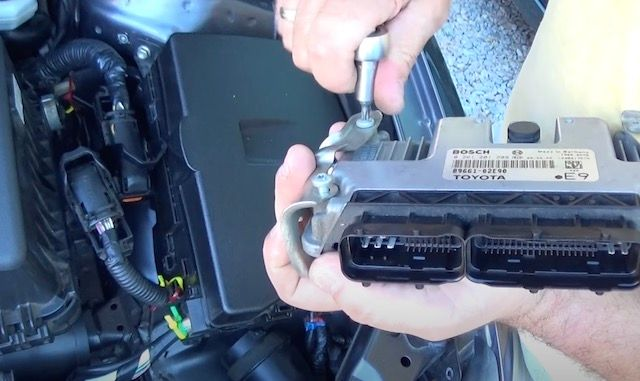
Image Credit: The CarCareNut
One of the biggest mistakes owners make is parts-cannoning; throwing parts at a problem, hoping one sticks. What’s even worse than that? Using big-box aftermarket parts when replacing sensitive electronic internal components.
OEM replacement parts are the only proper solution. While repairing an old board is sometimes the only option for discontinued vintage models, factory parts are always the superior choice if available. It ensures the internal drivers are fresh and allows you to put a reliable manufacturer's warranty behind the repair.
How To Perform A Preliminary Check
Before you send your computer to a specialist, check for these unexplainable behaviors:
- Turn your key to the "On" position. If the Check Engine Light doesn't illuminate at all, the ECU might not be powering up due to an internal fault or a blown fuse.
- If a transmission has perfect fluid pressure but refuses to shift correctly, the computer may be failing to send the right command.
- If the car dies only after reaching a specific temperature and the fuel pressure is confirmed good, the ECU board may be heat-sensitive.
Remember that ECU problems tend to be very strange, unexplainable, and do not follow the typical pattern of diagnosis - expect the unexpected!
Olathe Toyota Parts Center Has Got You Covered
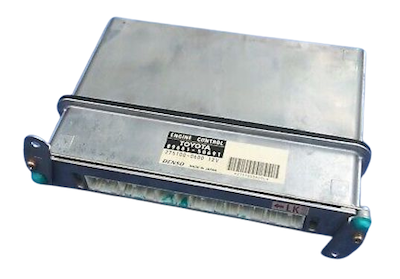
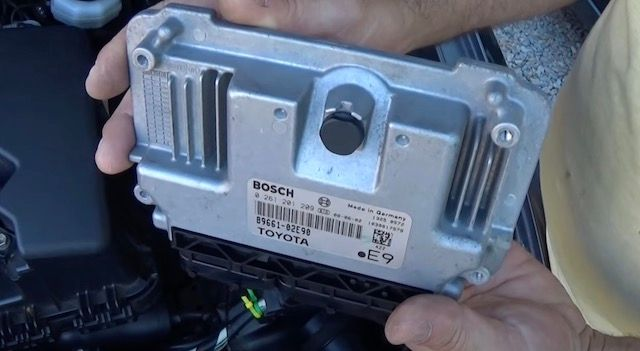
Image Credit: The CarCareNut
Once you've identified the problematic component, always use genuine Toyota parts to maintain your vehicle's longevity. Whether it’s the ECU that’s causing the issue or some other part, we have what you need:
Whatever Toyota model you drive, Olathe Toyota Parts Center has a huge selection of OEM parts at wholesale prices to keep your vehicle on the road for years to come. We have decades of online sales experience, and every OEM part we sell is backed by Toyota's trusted warranty. Use our VIN decoder to ensure you get the right part, the first time. Contact us or order online today.