

The Complete Guide to Toyota Ball Joints
While upgrades like lift kits and all-terrain tires get all the glory, the true unsung heroes of your Toyota’s handling and safety are its ball joints. These suspension components ensure your vehicle steers predictably and rides smoothly.
Essentially acting as the pivot point between your steering knuckle and control arms, ball joints function much like the ball-and-socket joints in your hips or shoulders. They bear the weight of your vehicle while providing the multi-directional flexibility needed to turn the wheels and absorb impacts from the road.
A standard Toyota ball joint consists of a highly polished metal stud housed inside a durable, grease-filled steel socket. To keep the lubrication in and road grime out, the entire assembly is sealed with a heavy-duty rubber dust boot.
What Does a Ball Joint Do in Your Toyota?
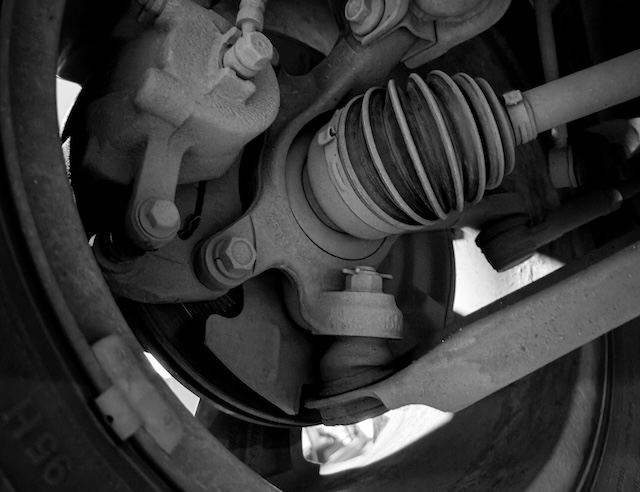
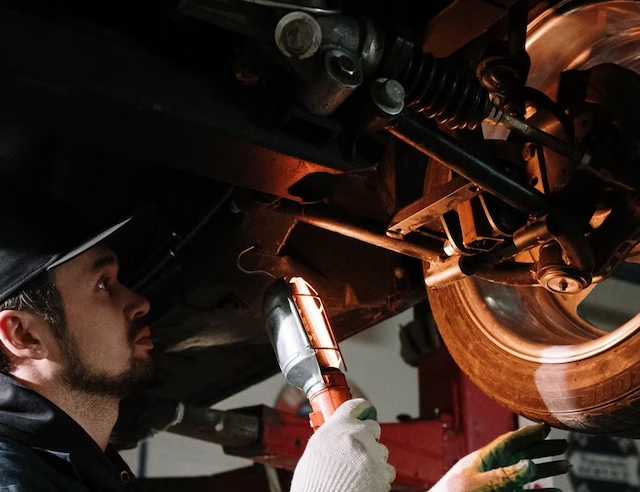
Your front suspension is a dynamic, constantly moving system. When you drive over a pothole while simultaneously rounding a corner, your suspension components must move vertically to absorb the shock while pivoting horizontally to maintain your steering angle.
The ball joint is the linchpin that makes this simultaneous movement possible. By linking the control arms to the steering knuckle, it allows your front wheels to travel up and down independently while responding instantly to steering wheel inputs. Properly functioning ball joints keep your tires planted firmly on the pavement, optimizing your contact patch for maximum traction, even tire wear, and a safe driving experience.
How Long Do Toyota Ball Joints Last?
There is no universal expiration date for a ball joint; its lifespan is dictated by your driving habits, local climate, and the type of terrain you tackle. In decades past, many trucks featured greasable ball joints that required regular maintenance.
If you drive a very early model Tacoma, 4Runner, or Sequoia/Tundra, your lower ball joint (LBJ) maintenance is important. Because of the specific tension-loaded suspension geometry on these older trucks, lower ball joint maintenance requires a proactive replacement approach to prevent failure.
Today, modern Toyota models utilize a 'sealed-for-life' design packed with advanced synthetic grease. Under normal highway conditions, it is not uncommon for OEM Toyota ball joints to last over the 100k mile mark.
Signs and Symptoms of Ball Joint Failure
Because ball joints endure constant friction and heavy loads, they will eventually wear out. As the internal metal components grind down, the joint develops play or looseness. If you ignore a failing ball joint, it can eventually separate completely, leading to catastrophic suspension collapse and a loss of steering.
Keep an eye (and ear) out for these common warning signs:
- Clunking or Popping Noises: A distinct, metallic clunk coming from the front corners of your vehicle when driving over speed bumps, dipping into potholes, or making tight turns is often the first sign of a dried-out or worn ball joint.
- Vibrations in the Cabin: As a ball joint loosens, it loses its ability to dampen road vibrations. You may feel a shimmy in the steering wheel or a vibration through the floorboards at highway speeds.
- Wandering Steering: If your Toyota feels floaty or tends to wander left and right, requiring constant steering corrections to keep it in a straight line, worn suspension joints are a likely culprit.
- Uneven Tire Wear: Because ball joints dictate your wheel’s alignment, a worn joint will cause the wheel to lean slightly inward or outward. Check your front tires for rapid wear on either the extreme inner or outer edges of the tread.
Diagnosing a Worn Ball Joint
If you suspect a suspension issue, checking your ball joints is a straightforward process.
First, safely lift and support the front of your Toyota so the suspension hangs freely. Grasp the tire at the 12 o'clock and 6 o'clock positions and firmly try to rock it back and forth. If you feel a noticeable clicking or movement, the joint is likely compromised.
For a more thorough check, take the wheel off and visually inspect the rubber dust boot. If it is torn, cracked, or leaking grease, the joint is compromised and needs replacing. You can also carefully wedge a pry bar between the control arm and the steering knuckle, applying upward leverage to check for vertical play in the socket.
Why OEM Toyota Ball Joints Are Non-Negotiable
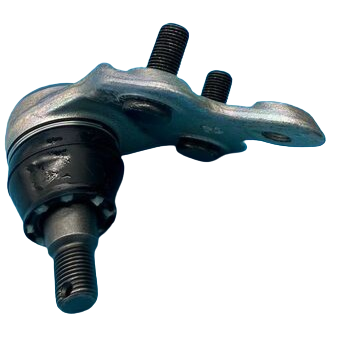
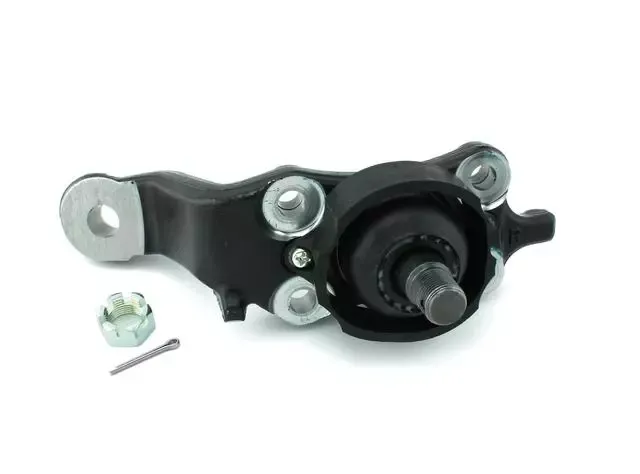
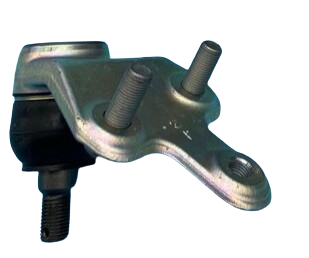
There is a golden rule regarding suspension parts: Always buy OEM.
While aftermarket ball joints might tempt you with a lower price tag at your local auto parts store, they simply cannot match the engineering standards of Genuine Toyota parts. Aftermarket joints frequently suffer from inferior metallurgy, thinner rubber boots, and poor tolerances. In heavy-duty applications, like a lifted Tacoma or a heavily loaded Land Cruiser, aftermarket ball joints are notorious for premature failure.
Genuine OEM Toyota ball joints are manufactured to the exact specifications, geometry, and load-bearing requirements of your specific vehicle. By choosing OEM, you are preserving the legendary reliability your Toyota was built upon, ensuring factory-fresh handling and long-term peace of mind.
Shop Genuine Toyota Suspension Parts at Toyota Parts Center
When it’s time to service your suspension, don't compromise your vehicle's safety or performance with second-rate aftermarket components.
At Olathe Toyota Parts Center, we carry a huge inventory of Genuine OEM Toyota ball joints, control arms, and steering components to keep your vehicle tracking straight and true. When you shop with us, you get wholesale pricing, fast shipping directly to your door, and the confidence of knowing you are buying exact-fit factory parts.
Contact us if you have questions, use our VIN decoder to browse for your parts in our online catalog, and discover all the benefits of choosing Olathe Toyota Parts Center for your next repair today!