

Common Toyota 2GR-FE V6 Engine Problems Explained
Toyota engines are known for their ruggedness and reliability. The 2GR-FE V6 is no different. First used on the Toyota Avalon in 2005, it has seen duty in the Camry, RAV4, various Lexus ES and RX models, and even the Lotus Evora sportscar.
The 2GR-FE marked several firsts for Toyota in this segment. It debuted dual Variable Valve Timing, used a cam chain instead of a cam belt, and also introduced hydraulic lifters. Due in part to the many new technologies introduced in this engine, early versions were sometimes not very reliable.
Join 'The Car Care Nut' in the video below as he details the pros and cons of this engine. He also demonstrates how to repair common faults using a customer’s 2009 Toyota Highlander.
Features Of The 2GR-FE V6 Engine
- Cam chain driven
- Hydraulic lifters
- Dual variable valve timing
- 3.5-liter capacity
- 270 – 315 horsepower
- 248 – 260 lb.ft. of torque
- Used from 2005-on in several Toyota models
- Shares many components with 4.0-liter 1GR-FE V6
Several changes and modifications were made over the years, either to address issues or to simplify servicing and maintenance.
For example, the Electronic Control Unit (ECU) on early engines was inside the glovebox but was moved under the engine bay in later years.
Some updates, such as moving to a plastic bypass pipe, actually caused issues. Overall, the 2GR-FE has proven to be a solid and reliable engine that will run for years if properly maintained.
Common 2GR-FE V6 Issues
Image Credit: TheCarCareNut
Like most Toyota engines, the 2GR-FE is a tough old unit. Early engines weren’t quite as robust, though, with some suffering from a variety of reliability issues. While these were slowly dealt with over time, the most common problems you can encounter with these engines are listed below:
Variable Valve Timing – gears would come apart on early engines. Updated gears on later models tend to wear out causing a rattle on a cold start. Running the engine low on oil can cause damage to the VVT gear very quickly.
Oil leaks – front timing cover leaks were common on earlier engines. Head gaskets are also known for leaking over time.
Coolant leaks – external coolant leaks are less common, but the cooling system should be refurbished during any engine-out job. Coolant can leak in the valley of the engine which is hard to see until it is bad enough that it is dripping on the floor.
Cam chain tensioners- These can start rattling, requiring the pulley and tensioner to be replaced as they are one unit.
Timing chain sprockets - These should be replaced during an engine out job. The chain leaves an imprint on the surface, and refitting it even slightly incorrectly can cause problems.
Oil Cooler Lines – These are not standard fitment on all 2GR-FE models, being more common on vehicles that are designed to tow. Some earlier models had rubber lines that could rupture.
Water Pumps – these are known to fail on all versions of the engine and should be replaced during a major engine-out repair job.
For some more information on common issues with Toyota Highlanders of all ages, read our blog here. And check out some great Highlander hacks here.
Working On A Toyota 2GR-FE
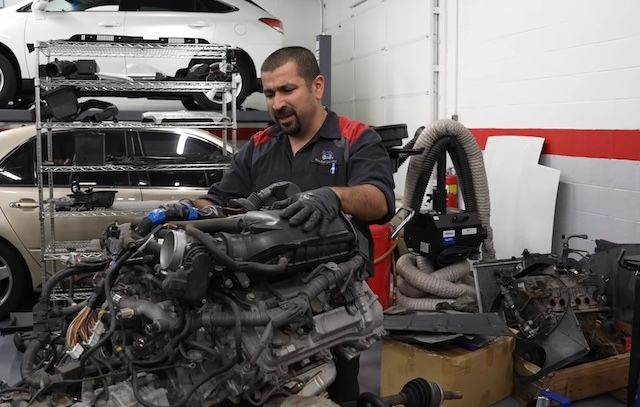
Image Credit: TheCarCareNut
The 2GR-FE is physically a very large engine. Certain basic service tasks can be done with the engine in place, but it will have to come out for bigger jobs. As you can see from the timelapse video of the Car Care Nut removing the engine, it looks like a very complex process. In fact, the engine was designed to be removed, but it is labor intensive, so it’s best to tackle several jobs at the same time to save on costs.
“There is a systematic approach to this”, says the Car Care Nut when referring to the engine removal process. He discusses how he follows a specific process so that no part is left out or damaged.
“This is a very expensive job…If you’re going to pull this engine out, try to do everything.”
- Car Care Nut
The 2009 Highlander the Car Care Nut is working on in his video is a relatively low mileage example, with just 98,000 miles on the clock. Aside from the rattling VVT system and a very minor head gasket leak, he finds that it is in great condition. The bores are almost as new, with no carbon buildup evident on the pistons.
One important point that the Car Care Nut mentions is that you should never run this engine with poor quality oil or allow the oil level to drop too low. This can cause serious issues that may need a complete engine rebuild or replacement.
OEM Parts From Olathe Toyota Parts Center
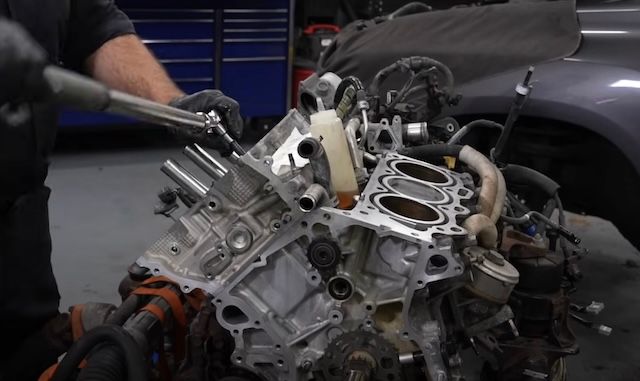
Image Credit: TheCarCareNut
The Car Care Nut always recommends OEM replacement parts. Using aftermarket components can cause damage to your vehicle. For all your genuine OEM Toyota and TRD Performance parts, Olathe Toyota Parts Center has you covered. Check out some popular parts for the Toyota Highlander here.
As part of a Toyota dealership centrally located in Kansas City, we carry a huge supply of parts. We back every part we sell with a manufacturer warranty. We ship quickly to both the East and West coasts. Use our free online VIN lookup to be sure you're ordering the right suspension components - and order today.