

Should You Clean Or Replace Your Mass Air Flow Sensor?
You may wonder whether the mass air flow (MAF) sensor should be periodically cleaned or whether it’s a maintenance item that needs replacing. In this article we'll hear what the Car Care Nut believes are the pros and cons of both.
What Sort Of MAF Sensor Do You Have?
Toyotas have used several types of mass air flow sensors over the years.
- Older models (think 1980s and early 1990s) had a technically simpler unit that used a potentiometer to measure airflow into the engine.
- The majority of Toyota models up until very recently have used a smaller plastic MAF sensor called a hot wire mass air flow unit. This is the most common type today.
- Some of the very latest Toyota models have a microchip type MAF sensor, which works similarly to the hot wire MAF units but gives more accurate readings.
How Does A MAF Work?
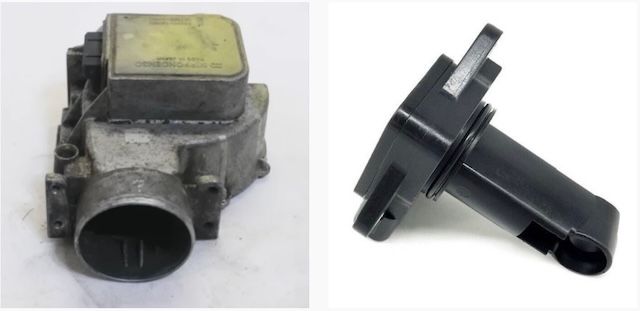
Image Credit: The Car Care Nut
A MAF sensor measures how much air enters the engine so that the electronic control unit (ECU) can determine the optimal air/fuel mixture for optimal combustion. Toyota MAF sensors also measure the temperature of the air entering the engine, as this affects the density of the air, and the ECU will need to compensate accordingly.
In hot wire MAF sensors, there are two thin wires with heating elements located inside the unit. One wire is placed directly in the path of the airflow, and the ECU will compare the temperature differences to make its air/fuel calculations.
The latest MAF sensors incorporate a small microchip between these sensors for more accurate measurements. For more information on MAF sensors, read our comprehensive guide here.
How To Recognize And Diagnose A Faulty MAF Sensor
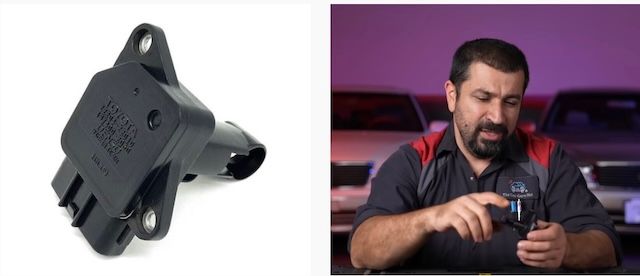
Image Credit: The Car Care Nut
A MAF sensor can fail due to electrical issues, mechanical damage, or simple wear and tear over time. Contaminants can also build up on the wires, which, in extreme cases, can be seen as a thin film of dirt. This is the most common reason for failure, typically caused by sand, heavy dust, and missing or bad air filters.
Any of these issues can prevent the MAF sensor from giving accurate readings. When it malfunctions, the ECU will not know how much air is entering the engine, and the air/fuel ratio will be incorrect.
In most cases, the air/fuel ratio sensor will try to compensate for the inaccurate ECU readings, and your check engine light will go on. If ignored, you will notice the following symptoms:
- Poor fuel economy
- Hard starting, rough idling or stalling
- Misfires and poor overall performance
Testing Your MAF Sensor
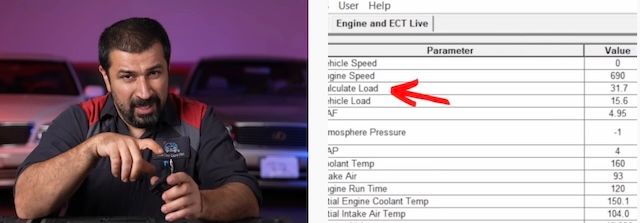
Image Credit: The Car Care Nut
Unless you have a spare MAF sensor lying around (and we're guessing most folks don't!), the next best way to test your MAF sensor is to use a basic scan tool that is capable of displaying live data.
What you are looking for is the calculated load reading (CALC Load). This is a number based on the input of the MAF sensor. It is displayed as a percentage. These are the figures you are looking for:
| Throttle Input | Calculated Load Readings |
| Idle | 15-25% |
| Full Throttle | 80-90% |
The idle figure can vary based on several factors, but if your full throttle readings are below 80%, then the MAF sensor is not functioning properly. This test procedure applies to all types of Toyota MAF sensors.
If the load readings are within spec, then you can also check the temperature sensor by taking a reading when the car is cold, and then again once it has been warmed up.
Replacing Or Cleaning The MAF Sensor
The mass air flow sensor is a very delicate sensor, it's easy to damage it while trying to clean it.
If you have tested your sensor and found it to be faulty, you have two choices: cleaning or replacing. However, remember that this is an extremely delicate part and must be handled with care! You can easily damage a perfectly functioning MAF sensor by being too aggressive with the cleaning.
Cleaning The MAF Sensor Do’s And Don’ts
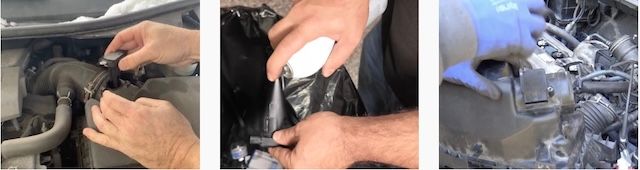
Image Credit: The Car Care Nut
- Dropping the sensor or immersing it in water is likely to damage it beyond repair.
- Touching the filament inside the unit will also cause it to malfunction.
- The only way to clean a MAF sensor is by using an electronic contact cleaner or brake cleaner. Don’t overdo it because this too can damage the sensor.
- Use a light pressure compressed air gun to gently dry and clean the unit.
- Never clean an older potentiometer style MAF sensor or the latest microchip type.
- Do not clean a MAF sensor that is working perfectly - you may damage it in the process.
Replacing The MAF Sensor
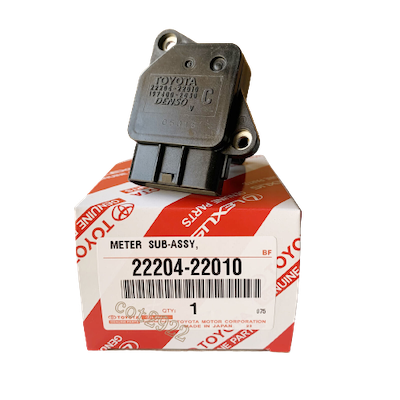
In most cases, especially if you are a DIY mechanic, it is more effective to replace the MAF Sensor. As the Car Care Nut explains, you will never get it perfectly clean, and it is very easy to damage it during the process.
Cleaning and retesting the MAF sensor several times is time-consuming, and the more you do it, the higher the chances are that you will end up damaging it. For the best results, replace the sensor with an OEM unit that is guaranteed to fit and function perfectly.
Pro Tip: If you have an older MAF unit, or one of the latest microchip-style ones, then the Car Care Nut recommends replacement ONLY as they cannot be cleaned effectively.
Always Use Genuine Toyota Components
At Olathe Toyota, we stock a wide range of OEM MAF parts, all at wholesale prices backed by Toyota's 12-month unlimited miles warranty. We stock a huge range of OEM components for Toyota and Lexus models of all ages. Whether you need a replacement MAF sensor, service items, TRD upgrades, or even a hard-to-find accessory, we are ready to help. Use our VIN lookup tool to find the right part and take advantage of our wholesale prices for the best savings around.
We also have a handy online resource center and links to free, downloadable Toyota owner’s manuals from 2000 on. Contact us for more information and order your replacement MAF sensor today.