

All You Need To Know About Toyota EVAP Systems - Pt. 2
We've covered the basics on what the EVAP system is and how it works. Now, let's talk about the most modern version of this tech, the Toyota LEV-2 vacuum system.
Ever walked out to your garage a few hours after parking and heard a mysterious humming sound from the rear of the vehicle? You aren't hearing things. If you drive a late-model Toyota or Lexus, what you hear is likely your vehicle running a self-diagnostic check on its Evaporative Emission Control (EVAP) system.
We get it - the EVAP system feels like a maze of hoses and mysterious codes. However, modern Toyota EVAP systems - specifically the LEV-2 and LEV-2 with vacuum pump architectures - are actually masterclasses in simplified, intelligent engineering. Who better to help us navigate the EVAP maze than The Car Care Nut? Whether you're trying to figure out why your gas pump keeps clicking off during filling, or you're chasing down a leak code, understanding how these systems breathe is the key to diagnosis - here's his breakdown:
The Next Step In Toyota EVAP Systems: Enter LEV-2
In the old days (think 1980s and 90s Land Cruisers), EVAP systems relied on a spiderweb of mechanical thermal vacuum switches under the hood that were prone to cracking and fatigue. By 2004, Toyota introduced the LEV-2 system, which dramatically cleaned up the engine bay and consolidated the components.
Instead of running long, vulnerable fresh-air lines all the way from the air filter to the back of the car, the LEV-2 system brought the vent valve (also known as the canister closed valve) directly onto the charcoal canister near the fuel tank. Here's how it works:
- Refueling: When you pump gas, fuel vapors are pushed into the charcoal canister. The vent valve opens to allow the displaced, clean air to escape.
- Purging: When driving, the engine opens the purge valve under the hood, using engine vacuum to suck the trapped fuel vapors out of the canister and burn them in the engine. Fresh air is drawn in through a small filter to replace the vapors.
Pro-Tip: A common LEV-2 problem may result from the fresh air filter being located under the rear of the vehicle, near the filler neck, making it highly susceptible to the elements. A frequent culprit for an EVAP code on these models is actually insects - they love to build nests inside this filter, clogging the system and tricking the computer into thinking the vent valve is stuck closed.
The Modern Marvel: LEV-2 With A Vacuum Pump
If you drive a newer Toyota (up to the 2025 model year), you likely have the highly sophisticated LEV-2 system with a built-in vacuum pump. This setup is incredibly reliable because it reduces the entire system to just four main components: the fuel tank, the purge valve, the fresh air filter, and the charcoal canister (which now houses a pump module).
Engineers realized that testing EVAP pressure using engine vacuum was flawed because atmospheric pressure varies significantly with altitude. To solve this, Toyota added a self-calibrating vacuum pump and a tiny, precisely machined 0.5mm opening inside the canister.
The Five-Hour Test
Roughly five hours after you turn the engine off, the computer seals the system and turns on the vacuum pump (the humming sound you hear in your garage). It forces air through that exact 0.5mm opening to create a baseline pressure reading for your specific altitude and weather conditions.
Once calibrated, it pulls a vacuum on the entire fuel system. Because it has an active pump, it can pull the vacuum well below baseline. If it achieves and holds this deep vacuum, the computer knows with 100% certainty that your system is sealed tight. No leaks, no guesswork.
Pro Diagnostic Tips For The DIY Toyota Owner
Diagnosing an EVAP leak requires patience and a solid understanding of your specific system. If you are throwing a code, avoid the temptation to just throw expensive parts at the car. Keep these diagnostic tips in mind:
1. The Smoke Test Trap
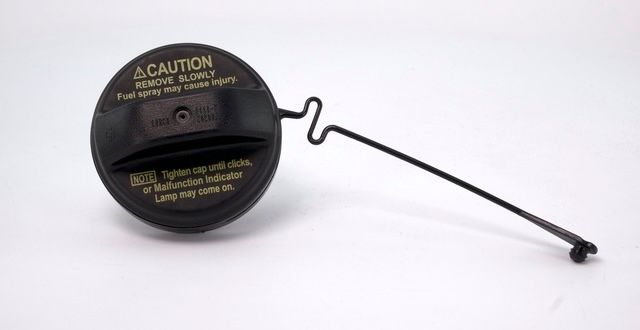
The number one mistake DIYers make when using a smoke machine is connecting it directly to the purge line under the hood without closing the vent valve. If you do this, smoke will just pour out of the filler neck or the fresh air intake, leading you to falsely believe you have a bad gas cap or a massive leak.
The fix? If your system has a service port, use a scan tool to command the vent valve closed before smoking the system. If it doesn't have a port, connect your smoke machine directly to the fresh air intake tube at the rear of the car. This will naturally pressurize the system in the correct direction.
2. The Soap and Water Trick
EVAP leaks can be as small as a pinhole (under 0.5mm). If you are pressurizing the system with smoke but can't see anything, grab a spray bottle of soapy water. Spray down the seams of the charcoal canister, the fuel pump gasket, and the rubber hoses. You might not see smoke, but the escaping pressure will create highly visible bubbles.
3. Why Your Gas Pump Keeps Clicking Off
If you can't put fuel in your vehicle without the gas station nozzle clicking off every two seconds, your EVAP system is choked. The nozzle shuts off when it detects vapor back-pressure.
This usually means the displaced air has nowhere to go. To pinpoint the issue, crawl under the rear of your Toyota and disconnect the fresh air hose from the canister.
- If the car fuels up perfectly with the hose disconnected, your fresh air filter or line is clogged.
- If it still clicks off, the charcoal canister's internal valving is likely packed with loose charcoal, meaning the canister needs to be replaced.
The Most Important Fueling Rule: Don't Top Off
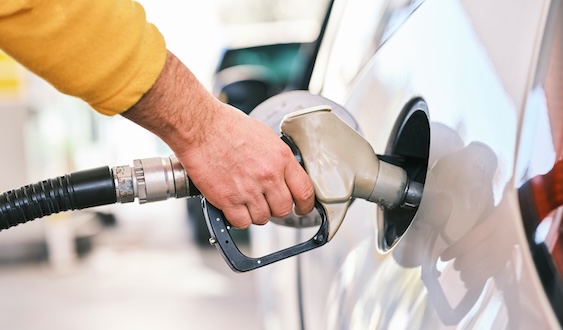
If there is one piece of advice The Car Care Nut believes every Toyota owner should take to heart, it is this: When the gas pump clicks off, stop fueling.
Continuing to squeeze the handle to round up to the nearest dollar forces raw, liquid fuel down the vapor lines and directly into the charcoal canister. This breaks down the charcoal pellets, turning them into a sludge that migrates through your expensive EVAP valves, ruining the entire pump module. Save your wallet and stop at the click!
OEM Emissions Parts From Toyota Parts Center
When it is time to perform diagnostics or repairs on your EVAP system, never settle for aftermarket parts that might fail a precise pressure test. Genuine OEM Toyota parts are engineered to meet the exact calibration standards your vehicle's computer expects.
Our huge selection of OEM parts at wholesale prices will keep you on the road for years to come. We have decades of online sales experience, and every OEM part we sell is backed by Toyota's trusted warranty. Use our VIN decoder to ensure you get the right part, the first time. Contact us or order online today.