

All You Need To Know About Toyota EVAP Systems - Pt. 1
Do you like the smell of gasoline?
It's a love/hate topic. If you've ever stood in a garage housing a classic car, you know that unmistakable smell of raw gasoline hanging in the air. And if you're a fan of the smell of gas, enjoy.
Back in the day, fuel tanks simply vented right into the atmosphere. But as we learned more about the environmental impact of hydrocarbons, regulations stepped in, and the Evaporative Emission System (EVAP) was born.
For Toyota and Lexus enthusiasts, understanding the EVAP system is a rite of passage. It is strictly an emissions control device, meaning a failure rarely impacts how your engine actually runs, but it is a frequent culprit behind the dreaded check engine light. Let's lift the hood and let The Car Care Nut teach us exactly how Toyota engineers designed these systems to trap, recycle, and monitor fuel vapors - check out the full video below.
The Evolution Of Toyota EVAP Systems
Toyota EVAP system technology has evolved significantly alongside OBD2 standards. Here is a breakdown of the primary generations you will find in Toyota and Lexus vehicles:
- Early Type Non-Intrusive (1980s – 1999): These systems were rudimentary and only partially monitored by the vehicle's computer. They lacked bi-directional control, meaning mechanics couldn't command the system to run diagnostic tests. They were only capable of detecting relatively large emissions leaks.
- Late Type Intrusive (~2000 and newer): A massive leap forward in diagnostics. This system introduced bi-directional control, allowing technicians to manually trigger valves for troubleshooting. More impressively, it halved the leak detection threshold, sensing microscopic holes as small as 0.5mm.
- LEV 2 (Low Emission Vehicle 2): Found in modern Toyotas, this generation maintains the strict 0.5mm detection standard but packages the components more compactly. The latest versions even feature a dedicated vacuum pump, allowing the vehicle to run EVAP self-tests while the car is completely shut off.
- Hybrid Closed Fuel Tank Systems: Toyota hybrids use a highly specialized, completely sealed system designed to achieve zero leaks, which is a marvel of modern emissions systems engineering.
Anatomy Of A Late-Type Intrusive System
To understand how your Toyota keeps fuel vapors out of the atmosphere, you need to know the major players in the EVAP system.
The Charcoal Canister: Think of this as the vault. When fuel sits in your gas tank, it naturally emits vapor. Instead of escaping into the air, these fumes are routed into the charcoal canister, where activated charcoal absorbs and traps them.
The Purge Valve and Line: Trapping the fumes is only half the battle; the car still needs to burn them. A purge line connects the canister to the engine. Because the running engine naturally creates a vacuum, it can suck these vapors out of the canister. However, to prevent a constant, unregulated vacuum leak, Toyota uses an electronic purge valve that stays closed until the computer specifically commands it to open and purge the canister.
Canister Closed Valve (CCV) and Fresh Air Line: If the engine sucks vapor out of the canister, fresh air needs to replace it, or the system would crush under the vacuum. A fresh air line connects the canister to the engine's airbox (using filtered air). The CCV sits on this line. It is normally open to allow breathing, but can be electronically shut by the computer when it's time to run a pressure test.
Onboard Vapor Recovery: When you are at the pump filling your tank, the rising fuel level forces a massive amount of vapor out of the tank. A mechanical, spring-loaded valve opens under this pressure, routing the heavy fumes directly into the charcoal canister while preventing liquid fuel from splashing in, which would destroy the charcoal element.
How Your Toyota Runs An EVAP Self-Test
One of the most fascinating aspects of OBD2 Toyota systems is their ability to self-diagnose. Here is how the computer sniffs out a microscopic 0.5mm leak:
- The Purge: First, the engine opens the purge valve to suck the canister completely dry of fumes, ensuring no raw hydrocarbons are accidentally dumped if the test fails.
- The Seal: The computer commands the Canister Closed Valve (CCV) to shut, cutting off the fresh air supply.
- The Vacuum Pull: With the CCV sealed, the computer opens a specific tank bypass valve (connecting the fuel tank to the canister) and opens the purge valve again. This allows the engine to pull a deep vacuum across the entire fuel system.
- The Pressure Test: Once a specific vacuum level is reached, the purge valve closes. The system is now a sealed vacuum. The computer watches a dedicated pressure sensor on the gas tank.
If the vacuum holds steady, the system passes. If the vacuum drops too quickly, the computer knows atmospheric air is sneaking in. A massive, immediate loss of vacuum usually points to a completely broken line or a missing gas cap. A slow drop points to a micro-leak or a failing, degraded gas cap seal. The computer even watches for tiny pressure ripples to confirm individual valves are physically snapping shut when commanded.
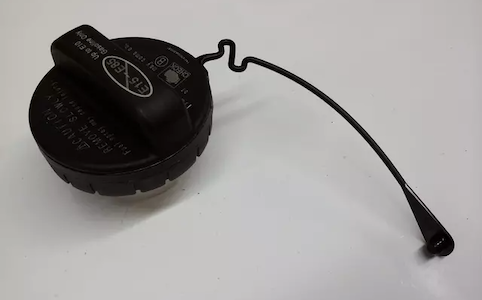
Pro-Tip: A faulty gas cap is one of the most common causes of an EVAP code. Because it is a moving part subjected to constant use and fuel vapors, the rubber gasket may dry out and fail to hold the vacuum required during the computer's self-test. Avoid codes and find your new OE Toyota filler lid here.
Keep Your Toyota Running Clean with Genuine OEM Parts
Using high-quality, genuine factory components is the only way to ensure your intricate emissions system seals perfectly. Aftermarket purge valves and generic gas caps often fail the computer's rigorous pressure tests right out of the box.
Don't let a check engine light keep your Toyota off the road. From OEM charcoal canisters to replacement gas caps, we have the exact factory parts you need to keep your Toyota performing exactly as the engineers intended. Benefit from our decades of online sales experience, wholesale prices, and fast shipping by ordering today - and stay tuned for our next post to learn more about the most modern LEV-2 Toyota EVAP systems and how they work.