

A Guide To Buying Bigger Tires: Stock, Larger, And Lifted Options For Toyota Tundra
Are you looking to give your Toyota Tundra a more commanding presence? Whether you want to dominate off-road trails or simply want to fill out those cavernous wheel wells, upgrading your rubber is one of the most impactful modifications you can make.
While truck wheels used to be modest 14- or 16-inch setups, modern Tundras now roll off the assembly line with massive 18-, 20-, or even 22-inch factory rims. For many owners, however, the factory look is just a starting point. This guide breaks down exactly how large you can go with your tires, the "rules of the road" for fitment, and what to expect when you move away from stock dimensions.
Toyota Tundra OEM Tire Sizes
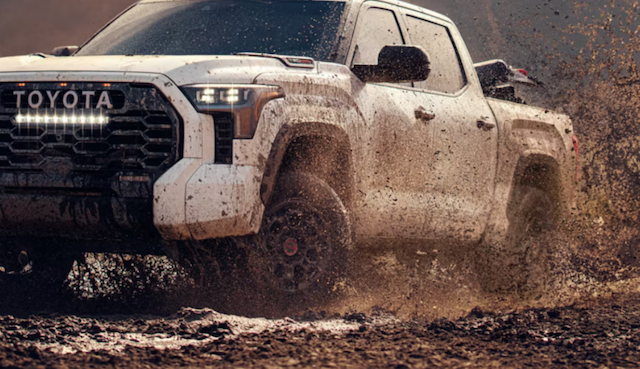
To know how far you can go, you first need to know where you started. Toyota has utilized several configurations over the years. Refer to the tables below to find your factory specifications.
| Toyota Tundra Gen 1 (2000–2006) | |
|---|---|
| SR5 | 245/70 R16, 265/70 R16, 265/65 R17 |
| Limited | 265/65 R17, 275/55 R18 |
| TRD | 265/65 R17 |
| Toyota Tundra Gen 2 (2007–2021) | |
|---|---|
| SR | 255/70 R18 |
| SR5 | 275/65 R18 |
| Limited / Platinum / TRD Sport | 275/55 R20 |
| TRD | 275/65 R18, 285/70 R18 |
| Toyota Tundra Gen 3 (2022–Present) | |
|---|---|
| 1794 Edition / Limited / Platinum | 265/60 R20 |
| Capstone | 265/50 R22 |
| SR5 | 265/60 R20, 265/70 R18 |
| SR | 245/75 R18 |
| TRD Pro | 285/65 R18 |
Decoding Your Tires: What Do The Numbers Mean?
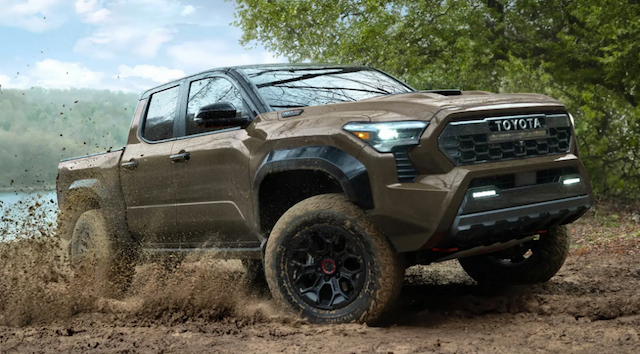
Before browsing for new sets, you need to understand the alphanumeric string on your tire’s sidewall. Let’s break down a common Tundra size - 265/60 R20 - into plain English:
265 (Width): This represents the width of the tire in millimeters from one sidewall to the other. A higher number means a wider tire and a larger footprint on the road.
60 (Aspect Ratio): This number tells you the height of the sidewall. It is a percentage of the width. Here, the height of the tire wall is 60% of 265mm. A higher sidewall is better for off-roading and ride quality, but worse for on-road handling.
R (Construction): This stands for "Radial," which is the standard design for nearly every modern highway and off-road tire.
20 (Rim Diameter): This is the size of the wheel (in inches) that the tire is built to fit.
Mastering tire measurements is essential for Tundra owners who want to maximize ground clearance without sacrificing safety.
How Big Can You Actually Go?
The most frequent inquiry from Tundra enthusiasts is: "What’s the limit?" Adding larger tires is a fantastic way to gain ground clearance, but going big comes with physical and practical limits. If you exceed the dimensions of your wheel well, you’ll encounter rubbing - an annoying and potentially damaging contact between the tire and the truck's frame or plastic liners. Before you size up, consider these three factors:
- Calibration Issues: A larger circumference means your truck travels further with every tire rotation than the computer thinks it does. This causes your speedometer and odometer to display lower-than-actual speeds. You will likely need your truck’s ECU reprogrammed to correct this.
- Torque and Power: Larger tires are heavier and harder to rotate. This can rob your Tundra of its off-the-line pep. If you go significantly larger, you might even consider a shorter final drive to regain some of the lost acceleration.
- Ride and Handling: Larger diameter tires that are also wider and have a low profile will detrimentally affect your truck’s off-road ability, ride quality, and steering feel. Your grip levels on tar roads will be better, though.
While massive tires offer an aggressive aesthetic, they also increase the rotating mass, which can make your truck feel less responsive during acceleration.
Rules For Fitment
The 3% Guideline: Most tire professionals recommend staying within 3% of the original tire height and width if you aren't installing a lift kit. This is often called a 'Plus 1' upgrade. (For more on maintaining your setup, check out this tire care article).
The Lift Equation: A simple rule of thumb is 1 inch of lift equals 1 inch of tire height. If you install a 3-inch suspension lift, you can typically accommodate a tire that is 3 inches taller than stock. However, width is a different story; wider tires often require specific wheel backspacing to avoid hitting the suspension arms.
In most cases, you can increase the height and width of your tire by 3% (1-inch) without a lift or leveling kit.
Oversized Tire Recommendations By Generation
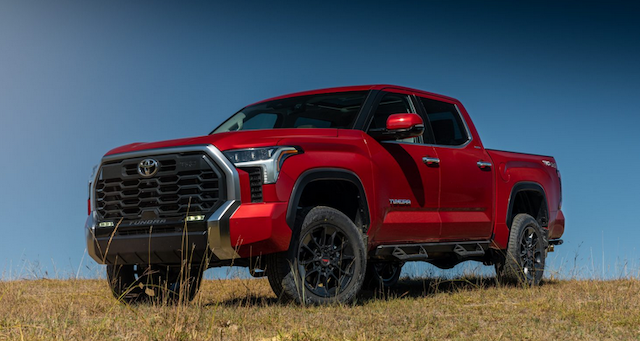
The recommendations below are calculated using standard Toyota factory wheel specifications. If you are upgrading to aftermarket wheels with custom backspacing, this can provide the extra room needed for an even wider footprint. However, if you push the width to the limit, we recommend adding fender flares.
Below are the oversized tire recommendations for the 2nd- and 3rd-generation Tundras. First-gen Tundras are still popular, but most owners prefer aftermarket mods for these trucks, since OEM upgrades were much milder back then.
Second-Generation Tundra (2007–2021)
This generation is well known for its massive wheel wells, but the front bumper plastics and upper control arm (UCA) clearance are the primary limiting factors for oversized rubber on factory wheels.
Max Tire Sizes For Stock Suspension Setups
| Trim Level | Stock Tire Size | Max Tire Size (Within 3%) | Height Increase | Notes |
|---|---|---|---|---|
| SR | 255/70 R18 | 275/70 R18 | +2.7% | This is the standard size for TRD Off-Road trims and fits perfectly on SR wheels. |
| SR5 / TRD | 275/65 R18 | 275/70 R18 | +2.9% | A popular upgrade that fills the wheel well without requiring any trimming. |
| Limited / Platinum | 275/55 R20 | 275/60 R20 | +3.0% | Adds exactly 1 inch of total tire diameter. It offers a much beefier look for street-style 20" rims. |
| TRD (Oversize) | 285/70 R18 | 295/70 R18 | +1.8% | While already a large tire, the 295/70 R18 is a popular wide-stance option that stays well within the 3% limit. |
Upsizing for the Leveling Kit: Recommended Tires (1.5" – 2" Lift)
If you have installed a leveling kit to eliminate the factory rake (where the front sits lower than the rear), you have significantly more vertical clearance. On a second-generation Tundra, this modification allows you to push slightly past the standard 3% rule while still utilizing your factory wheels. Below are the best tire and wheel options for a leveled Gen-2 Tundra:
| Trim Level | Stock Tire Size | Leveling Kit Max Size | Height Increase | Why It Works |
|---|---|---|---|---|
| SR | 255/70 R18 | 285/70 R18 | +4.9% | The extra 2 inches of front lift allows this 33.7" tire to clear the fender liners. |
| SR5 / TRD | 275/65 R18 | 285/70 R18 | +5.1% | This is the most popular "leveled" setup. It offers a massive appearance upgrade with minimal work. |
| Limited / Platinum | 275/55 R20 | 285/60 R20 | +4.5% | This size adds width and nearly 1.5 inches of height, giving luxury trims a much more rugged stance. |
| TRD (Oversize) | 285/70 R18 | 295/70 R18 | +1.8% | Since this trim already runs large rubber, the leveling kit simply ensures no rubbing occurs when the suspension is compressed. |
A leveling kit is the perfect middle ground for Tundra owners; it provides enough clearance for a true 33-inch tire without the complexity or cost of a full suspension overhaul.
Third-Generation Tundra (2022–present)
The latest Tundra features a redesigned suspension and different offset requirements. Toyota designed larger wheel wells to address consumers' growing demand for larger tires.
Third-Gen Tundra: Maximum 3% Upsize Options (Stock Suspension)
It is easier to fit larger tires on the 2022–2026 Toyota Tundra than in prior generations. However, because these trucks rely heavily on the Toyota Safety Sense (TSS) suite, keeping your tire diameter within 3% of the factory height is essential to prevent system errors or speedometer inaccuracy. Below are the recommended "no-lift" upsize options for the Third-Gen Tundra:
| Trim Level | Factory Tire Size | Recommended Max Size (Within 3%) | Total Height Change | Why This Works |
|---|---|---|---|---|
| SR | 245/75 R18 | 265/70 R18 | +0.3% | This is the standard size for the SR5 and fits the base SR wheels with zero issues. |
| SR5 / SR | 265/70 R18 | 275/70 R18 | +1.8% | Adds nearly an inch of height and a bit of width. This is the "safe" off-road look for stock 18s. |
| 1794 / Platinum / Limited | 265/60 R20 | 275/60 R20 | +1.5% | Provides a more rugged sidewall and fills the gap between the tire and the fender on luxury trims. |
| TRD Pro | 285/65 R18 | 295/65 R18 | +1.6% | Since the Pro is already slightly taller, the 295 width offers a much more aggressive footprint on the factory BBS wheels. |
| Capstone | 265/50 R22 | 275/50 R22 | +1.3% | For those with 22-inch rims, this provides a slightly taller sidewall to improve ride comfort on the highway. |
For the 2022+ Tundra, staying within a 3% diameter increase ensures that your advanced safety sensors and cruise control settings continue to function exactly as the factory intended.
Third-Gen Tundra: Oversized Tire Options (1.5" – 2" Leveling Kit)
The third-generation Tundra (2022–2026) responds exceptionally well to a front-end leveling kit. By raising the front 1.5 to 2 inches, you eliminate the factory rake and create enough clearance to move beyond standard sizes while still using your OEM wheels. Here are the recommended tire upgrades for a leveled Gen-3 Tundra:
| Trim Level | Factory Tire Size | Leveled Max Size (Recommended) | Total Height Increase | Why This Works |
|---|---|---|---|---|
| SR / SR5 | 265/70 R18 | 285/70 R18 | +3.9% | This is a perfect choice for a leveled truck on 18s. It fills the wheel well and adds significant ground clearance. |
| 1794 / Platinum / Limited | 265/60 R20 | 285/60 R20 | +3.1% | A wider, taller profile that balances luxury looks with an aggressive off-road stance. |
| SR5 / Limited (Wide) | 265/60 R20 | 295/60 R20 | +4.7% | A very popular choice; however, width clearance near the sway bar may be compromised. |
| TRD Pro | 285/65 R18 | 285/75 R18 | +6.7% | The TRD Pro's unique factory height combined with a level allows for a nearly 35-inch tire with minimal trimming. |
| Capstone | 265/50 R22 | 285/50 R22 | +2.4% | This adds width and height to the 22-inch rims, making the Capstone look much more rugged. |
Key Leveling Kit Insights For Gen-3 Owners
TSS and Camera Calibration: When you lift the front of a 2022+ Tundra, it is vital to ensure your Toyota Safety Sense (TSS) sensors and 360-degree cameras are functioning correctly. Most 2-inch levels do not require sensor recalibration, but a professional tire alignment is mandatory.
The '35-Inch' Question: While some owners squeeze 35x12.50 tires onto a leveled Gen-3, this almost always results in rubbing against the frame or the upper control arm (UCA) when using factory wheels due to the high positive offset. To run a true 35" tire safely, a higher-clearance UCA or different wheel backspacing is usually required.
Fuel Economy: Moving to a wider tire increases rolling resistance. Expect a noticeable dip in MPG compared to the factory highway-terrain tires.
The 2022+ Tundra is much more accommodating for taller tires than its predecessors, but width is still the primary factor for rubbing when you stick with the factory wheels.
A Note On 3" Lifts And Aftermarket Wheels
If you are planning a 3" lift, you will need to consider either a new set of wheels or wheel spacers. Standard factory rims often lack the necessary backspacing to take full advantage of a 3" lift with common oversized tire sizes.
While some owners use aftermarket rims to increase tire width up to 315mm (roughly 12.5"), be prepared for significant trimming of the fenders and wheel wells. Furthermore, ultra-wide tires like 315s put immense strain on front wheel bearings, which were not designed for that level of offset and weight. A more common and balanced width for a 3" lift is 285mm, though these typically require a wheel width of at least 8", which is wider than many OEM wheels.
Upgrade To Genuine TRD And TRD Pro Wheels
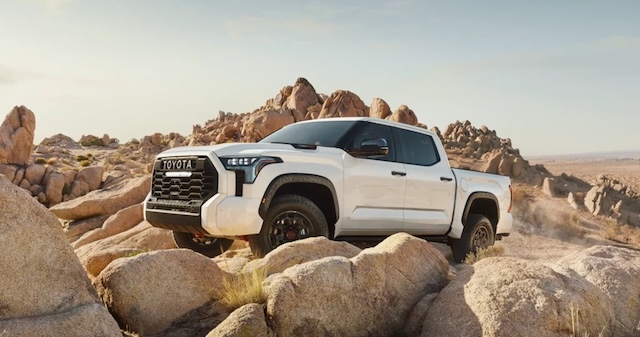
If you’re ready to pull the trigger on new tires, why not pair them with a fresh set of wheels? Upgrading to OEM TRD or TRD Pro wheels is a smart investment. Unlike generic aftermarket rims, TRD wheels are tested by Toyota engineers to handle the specific weight and stress of your Tundra, ensuring a perfect fit and long-term durability.
Many owners are surprised to find that buying genuine Toyota wheels is highly affordable when ordering online. You can get that iconic TRD Pro style at a competitive price point at Olathe Toyota Parts Online. Have more questions? Explore our TRD Pro Wheels FAQs or reach out to our team - we’re here to help you get the perfect fit.