

The High Cost Of Skipping Maintenance: What Every Toyota Owner Should Know
In this post we'll follow along as the Car Care Nut covers in detail how to best care for your Toyota vehicle. Car maintenance negligence can be very costly and can lower your Toyota’s reliability and result in engine problems and other expensive repairs. Follow this comprehensive guideline to prevent that from happening.
Engine Maintenance
There are several engine maintenance tasks you can do yourself. Some common ones are:
- Oil and oil filter
- Spark Plugs
- Coolant
- Engine Air Filters
- Cabin Air Filters
- Drive Belt
- PCV Valve
As with any combustion engine, oil changes are the most important engine maintenance job on any Toyota. These are the Car Care Nut’s recommendations:
Oil And Oil Filters
For non-turbo and hybrid models, the oil and oil filter should be changed every 5,000 miles or six months. For turbo engines, the oil should be changed every 3,000 to 4,000 miles and no longer than 4 months.
Spark Plugs
The majority of Toyota models require a new set of spark plugs every 120,000 miles or 10 years, whichever comes first. There are some exceptions, such as the 3.5-liter 2GR-FKS motor as found in certain Tacomas, Highlanders, Camrys and Lexus models. On these, the recommended change is 60,000 miles or 6 years.
Turbocharged engines such as the V35A-FTS and T24A-FTS should have their spark plugs changed every 40,000 miles or 4 years.
Coolant
Coolant flush intervals vary from model to model, but the Car Care Nut has a simple suggestion for you to follow:
- Replace the pink colored super long-life coolant every 50,000 miles or 5 years.
- Replace the red colored long-life coolant every 30,000 miles or 3 years.
Air Filters
The Car Care Nut says that the engine’s air filter should only be replaced when it is actually dirty or clogged up. The exact time and mileage will vary based on usage.
Drive Belt
Drive belts don’t have a specific change interval and can last for hundreds of thousands of miles. They should still be regularly checked for feathering, cracks, or noisy operation. Noisy belts are often due to faults with the tensioner.
PCV (Positive Crankcase Ventilation) Valve
There is no hard and fast rule with PCV valves. You should expect 100,000 to 120,000 miles out of a PCV valve, so plan on changing it when your next service falls into this mileage range.
Transmission Maintenance

If you have the knowledge to take on transmission maintenance, here's what the Car Care Nut recommends regarding factory-sealed transmissions and lifetime fluids:
On Toyota models that do not have a transmission dipstick, the fluid replacement intervals should be every 60,000 miles or 6-years. Flushes aren’t recommended, just a simple fluid change. Toyota’s that use the older ATF T4 fluid, should have their transmission fluid changed every 30,000 miles or 3 years.
For hybrid Toyotas, the fluid replacement window is between 60,000-90,000 miles and 6-9 years. For CVT transmissions and very modern hybrid models that use the clear TE fluid, the change interval should be every 60,000 miles and 6 years.
“The transmission fluid will need to be replaced if you have gone well over the recommended intervals for your fluid changes or are repairing the transmission.”
4WD Maintenance

On manual transmission vehicles with 4WD, the first fluid change should be done at 30,000 miles. The subsequent one at 80,000 miles unless you frequently head off road or tow, in which case it should be done at 60,000 miles.
General Fluid Maintenance
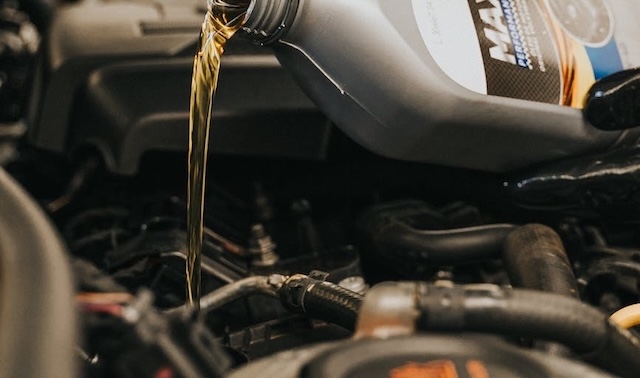
- Brake Fluid
- Power Steering Fluid
- Hydraulic Fluid
High performance models should have their brake fluid changed every 20,000 to 30,000 miles. On regular models a moisture test is required to ascertain whether a fluid change is required.
There is no recommended fluid change for the power steering, but budget on having it done every 50,000 miles or when the fluid is dark and contains grit and contaminants. Preventative car maintenance can save you money in the long run.
AHC (Active Height Control) fluid or hydraulic fluid for the suspension needs to be done every 60,000 miles. The fluid is expensive, but AHC failure is even more costly.
Hybrid Maintenance
- Inverter Coolant
- Hybrid Battery Fan Filters
- AWD transaxle fluid
The Inverter coolant uses the same pink super long-life coolant as the regular coolant system and should also be changed every 50,000 miles or 5 years. Some very early Prius models (pre-2003) use the red coolant which should be done every 30,000 miles.
“Hybrid battery fan cleaning is the most important maintenance job on a hybrid.”
Hybrid battery fans filters need to be inspected and cleaned regularly. Each model has a different location for the fan cover, so check your owner’s manual to locate it.
AWD hybrids have a rear e-transaxle or hybrid unit that uses WS fluid and need changing every 60,000 to 90,000 miles. Newer AWD hybrids use TE fluid which should be changed at 60,000 miles or 6 years.
Car Maintenance Tips
- Always do an annual inspection
- Stick to the Toyota service intervals
- It is advisable to let a professional carry out the inspection
- Avid DIYers should invest in a lift to properly inspect their car – you’ll miss a lot if you only use jack stands.
- DIYers should also keep up to date with servicing recommendations
- Use proper service procedures and don’t modify maintenance items
- Always use OEM parts – that is the secret to what makes your Toyota reliable
“Fluids, filters, everything... please use OEM parts.”
The main factor that makes your Toyota reliable is the original fluids and parts fitted to it. The cost of skipping car maintenance and using aftermarket parts is just not worth it.
Remember that not every OEM part costs more than its generic counterpart. Especially if you use trusted suppliers like Olathe Toyota Parts Center, who sell OEM parts at wholesale prices.
Tips For Owners Of Older Toyotas
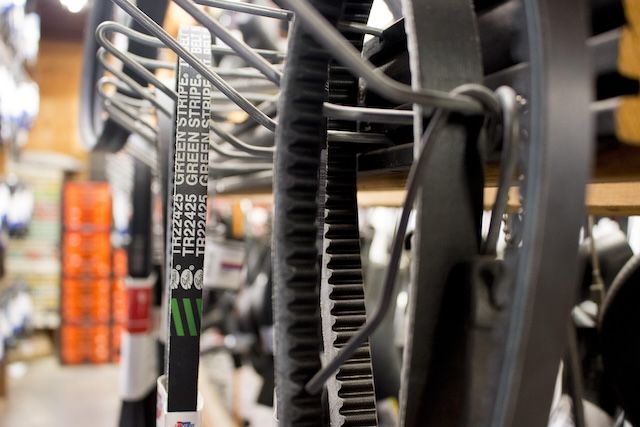
Post 2000 model year Toyotas with timing belts should have them changed every 90,000 miles or 9 years. Any Toyota built before 2000 should have its cam belt changed every 60,000 miles or 6 years.
“Any time you replace a timing belt, always do the water pump, idlers and tensioners and cam and crank seals as well.”
Cars with spark plug wires should have them replaced every 10 years. This also applies to distributor rotor and cap assemblies.
Engines without hydraulic lifters may require manual valve clearance adjustment. This is not a maintenance item, and should only be done if the valve ticking doesn’t go away once the engine has warmed up.
OEM Toyota Maintenance Parts From Olathe Toyota Parts Center
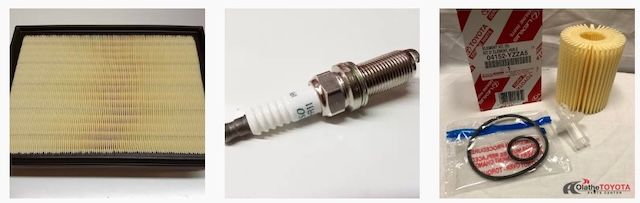
Olathe Toyota Parts Center stocks a wide range of OEM service and maintenance parts for just about any Toyota model. We have the perfect component for you at wholesale prices, and a resource center to help you find what you need. Our centrally located Kansas City dealership can ship your components quickly to the east or west coast.
All OEM parts are backed by the standard Toyota 12-month, unlimited miles warranty. Stick to your Toyota maintenance schedule and use our free VIN lookup tool to ensure you get the right part first time. We also have links to free, downloadable Toyota owner’s manuals from 2000 on. Contact us for more information.