

How To Diagnose And Fix Toyota Parking Sensor Problems
Modern Toyota and Lexus vehicles use advanced parking assist systems - often called ICS (Intelligent Clearance Sensors) - to detect obstacles and even apply the brakes when things get too close. While the technology is impressive, problems in the system can be tricky to diagnose. Many Toyota parking sensors are wired together in a daisy-chain design, which means one faulty sensor or broken wire can disrupt communication for all of them.
Check out the video below to see The CarCareNut break down how the system works, covers common failure points, and how to properly diagnose Toyota parking sensor problems without damaging delicate wiring.
"Before diagnosing anything, you must first understand how the system actually works."
- The CarCareNut
Understanding Toyota’s Daisy-Chain Parking Sensor System
Toyota uses multiple ultrasonic sensors mounted across the front and rear bumpers. Unlike older parking sensors that simply beep, these newer ICS sensors can trigger braking when an object gets too close. Here’s an in-depth look at Toyota's parking sensor design:
- All sensors in the front share a single harness.
- All sensors in the rear use a separate harness.
- Each sensor is identical internally, even if the brackets or finish differ.
- The sensors are connected in a daisy chain, meaning communication flows from one sensor to the next. If one sensor fails, everything after it becomes invisible to the control module.
Each sensor has six pins, but the end-of-chain connector uses only three wires. Toyota designed them this way to reduce wiring length and weight.
Diagnosing Parking Sensor Issues
Because all the sensors share a communication line, the system may throw the same code for multiple issues. The most common is:
- C1AED - Open or Short in Parking Sensor Circuit
This code can be caused by problems such as a bad sensor, a broken wire, or multiple issues at once. This is why technicians frequently misdiagnose the problem or are tempted to replace the entire system.
How To Test Toyota Parking Sensors
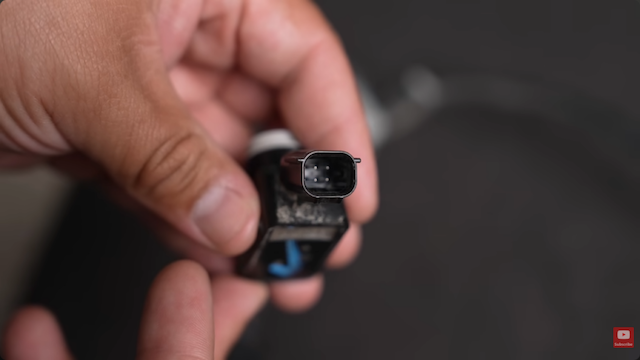
Image Credit: The CarCareNut
The CarCareNut emphasizes that testing must be done methodically to avoid chasing false failures.
1. Test the wiring harness in sections
The small wires between Toyota sensors are fragile - especially near the exhaust - so they must be handled carefully.
- Disconnect all sensors.
- Test each segment of the harness individually, not end-to-end through multiple sensors.
- Look for continuity on all three wires.
- Wiggle the wires; many breaks only appear under movement.
2. Use a known-good sensor
Resistance tests won’t always identify a bad sensor. Instead:
- Keep one working ICS sensor on hand.
- Swap the known-good sensor into each position one at a time.
- Attempt to calibrate after each swap.
When the system suddenly allows calibration, the faulty sensor has been found.
Calibration Problems And What They Mean
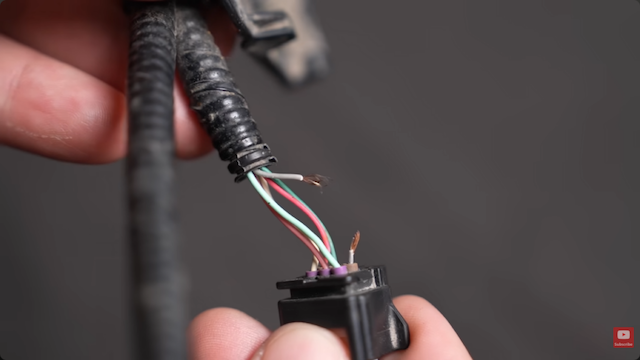
Image Credit: The CarCareNut
If a sensor is moved, replaced, or unplugged, the system will require recalibration. This step tells the ECU the angle and position of each sensor.
Calibration requires a scan tool capable of bidirectional controls. If calibration fails, either a sensor is bad, or a wire is broken, or the daisy-chain is disrupted. Testing the front sensors separately from the rear helps confirm whether the ECU is working correctly.
Tips And Tricks For ICS Repair
- Always inspect the harness after every unplug or movement.
- Expect brittle wiring - especially on rear bumpers near the exhaust.
- Consider replacing the harness during sensor repairs; they are not particularly pricey and can save a lot of labor time.
- Never assume the first sensor with a code is the bad one - test them individually.
Always Use OEM Replacement Parts For Your Toyota
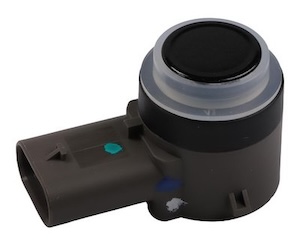
If you are having issues with your Toyota’s parking assist system, Olathe Toyota Parts Center has a wide range of OEM parking sensors and many other sensors at wholesale prices, all backed by the standard Toyota 12-month, unlimited miles warranty. Use our VIN decoder to ensure you get the right part, first time.
We also stock a complete range of Toyota parts from service items to engine blocks and everything in-between. Contact us today and benefit from our decades of online sales experience and fast shipping.