

How To Diagnose A Failing Engine Mount
Your engine mounts are vital components. They do exactly what you think they do - support the weight of the engine and keep it securely attached to the chassis. Let's take a look at some common tell-tale symptoms of worn out engine mounts, and how to diagnose and fix the problem on your own.
Common Causes Of Engine Mount Failure
Ever felt your body involuntarily lurch forward when your car stops or lean to the side when making a turn? That's a form of inertia. When you make turns and stops, inertia impacts your engine, too. Car engines are large, heavy, and subjected to torque - so they're not immune to inertia. That’s why engine mounts are necessary.
While OEM Toyota motor mounts will last for several years, they may eventually need replacing. Most vehicles have 2-4 engine mounts that are made from rubber fixed to a steel plate. The rubber absorbs vibration. Other mounts use hydraulic fluid to absorb vibration. The most common causes of failure include:
- Age-Related Wear And Tear: Over time the rubber can harden and crack, and metal can corrode or wear out.
- Accidents Or Collisions: Impacts from accidents often cause hidden damage under the hood, especially to parts like engine mounts.
- Fluid Leaks: If your engine mounts are exposed to oil or coolant leaks, the chemicals within these fluids will corrode the mounts faster that normal.
- Erratic Driving: Erratic driving tends to cause the engine to rock on its mountings. Hard take-offs, rough gear changes, and heavy braking or sudden cornering will put lots of stress on the mounts.
- Heat Exposure: Engine mounts live in the engine bay and are subjected to extreme heat from the engine as well as other high-temp components like the exhaust system. Environmental heat, dryness, or exposure to salt, can also accelerate wear on the engine mounts.
- Modified Or Worn Suspensions: If you have a modified or extremely worn-out suspension, it can put extra strain on the engine mounts.
Symptoms Of Engine Mount Failure

Engine mount failure can lead to serious issues. Try to identify the problem before it becomes a big issue by watching for these signs:
- Excess Noise And Vibration: Engine mounts are meant to absorb vibration. If they're going bad, more vibration is transmitted to the chassis. You'll hear it and feel it when driving
- Rough Feel When Shifting Gears: If the engine isn't well-supported, shift response will suffer. You'll notice more jolting throughout acceleration. You may even experience wheel hop when accelerating.
- Damaged Engine Bay Components: Take the time to do a thorough visual check. Your heavy engine could damage other components while shifting around under the hood. For instance, if it moves enough, it can impact your radiator hose. Radiator hoses are flexible, but they also are molded to a specific shape to fit between the engine and radiator. If an engine mount fails and sags, the radiators hose may get stretched out of shape. Over time, the hose may tear and leak.
How To Diagnose A Failing Engine Mount
The easiest way to troubleshoot and diagnose your engine mounts is with an engine movement test:
- Park your car on a flat surface and open the hood in order to observe the engine.
- Engage the parking brake.
- Shift the transmission into drive (or gear).
- While someone observes the engine, press down on the brake pedal and then slowly push the gas pedal. Do not exceed 2000 RPM. If one of the mounts is broken, the engine will move excessively.
- Shift the transmission into reverse and then repeat the process.
Note: If the mounts are failing, the engine will visibly lift or shift. However, don't be alarmed by a small bit of rocking from side to side - this is normal.
How Much Does It Cost To Replace Engine Mounts?

Changing your engine mounts is a job you can do yourself and save some money. As with many auto repairs, a large part of the repair expense it the labor. Why not avoid paying for shop labor by doing the job yourself?
Part costs will vary depending on the model, engine type, and type of motor mounts. However, most OEM Toyota mounts from Olathe Toyota Parts Center cost from $50 to $200. More complex and active mounts will, naturally, cost more. Keep in mind that generally speaking, when one mount goes bad the others are put under tremendous stress and generally go out as well. Therefore, it's best to budget for replacing all the mounts, not just one.
How To Replace Toyota Engine Mounts

Keep in mind that some engine bay designs allow easy motor access and can be replaced fairly quickly, others are more intricate and can take several hours. Be sure you refer to your owner's manual for information regarding the location of your mounts. (Find a free downloadable version of your Toyota Owner's Manual here.) Be prepared to spend some time under the hood for this job. It's always a good idea to replace all the engine mounts at the same time.
These instructions are based on the front mount of the 2003-08 Camry, but the basic steps will be similar for many Toyota sedan models:
- Support your engine by placing a floor jack and a piece of wood under your oil pan and applying light tension to it.
- Find the three bolts holding the front engine mount. Remove the center (through) bolt from the top of the engine bay. Move underneath the car and remove the remaining 2 bolts attaching the mount to the chassis.
- Gently pull out the old mount (it may take some wiggling/prying). Apply some rust penetrant if needed. The engine will drop a little bit. Make sure the floor jack is firmly holding the engine up.
- Install the new engine mount in reverse order, beginning with the 2 underneath bolts.
- Lastly, insert the through bolt from the top and secure the nut.
- Repeat with the other engine mounts.
Remember to take photos along the way to ensure you install the new part exactly as the old one was.
OEM Engine Mounts From Olathe Toyota Parts Center
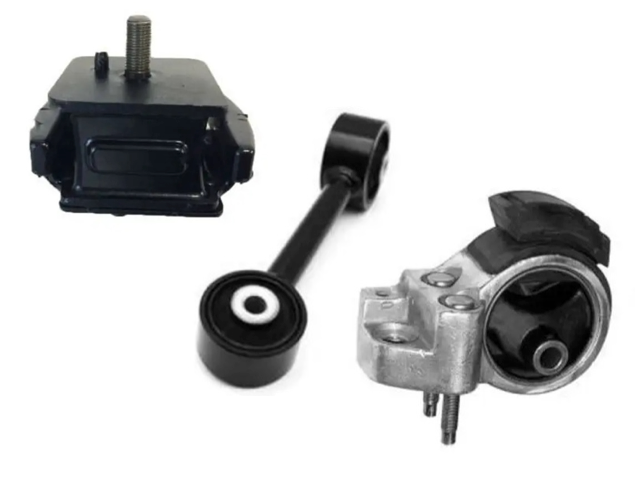
When you're ready to replace your Toyota engine mounts, shop Olathe Toyota Parts Center for OEM parts at great prices. Our huge selection is ready to ship, so you can get your car back on the road quickly.
We offer a free VIN lookup tool so you will be sure to get the right part when you order. We also have other online Toyota resources like an Engine Guide and Grille Swap Tutorials. Contact us if you have questions - and order today.