

How To Diagnose A Failing MAF: Troubleshooting Common MAF Sensor Problems
A Mass Airflow (MAF) sensor is a crucial component in modern vehicles, playing a vital role in regulating the air-fuel mixture for the engine. When a MAF sensor starts to fail, it can lead to various performance issues and possible engine damage. This blog will explore the symptoms of a failing MAF sensor and how to diagnose the part.
Common Symptoms of a Failing MAF Sensor
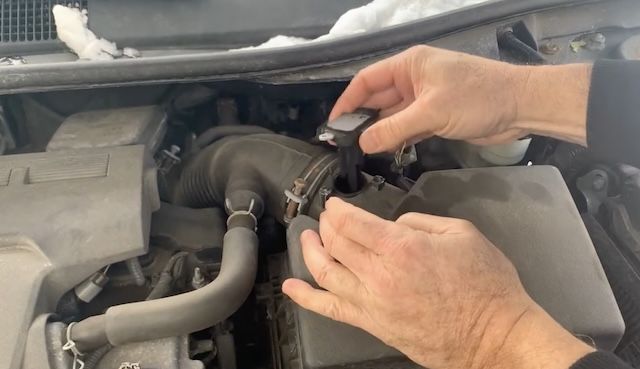
Image Credit: TheAutoTeacher
The MAF sensor measures the amount of air entering the engine. This data is essential for the engine control unit (ECU) to determine the correct air-fuel mixture for efficient combustion. A failing MAF sensor can disrupt this process, leading to poor engine performance and increased emissions.
- Decreased Fuel Efficiency: A failing MAF sensor can cause the engine to run rich (excess fuel) or lean (insufficient fuel), resulting in reduced fuel efficiency and potentially higher fuel consumption.
- Rough Idling: A rough or unstable idle is a common sign of MAF sensor issues. You may notice the engine idling erratically, sometimes even stalling.
- Lack of Power: Reduced engine power and sluggish acceleration can result from incorrect air-fuel mixtures caused by a failing MAF sensor.
- Check Engine Light: A malfunctioning MAF sensor often triggers the check engine light. You can use an OBD-II scanner to retrieve trouble codes, which may point to MAF sensor problems.
- Hesitation or Surging: Your vehicle may hesitate or surge during acceleration as the ECU struggles to adjust the fuel injection based on inaccurate MAF sensor data.
Driving with a completely failed MAF sensor may be possible, but your vehicle will drive poorly. Some cars revert to a base fuel map or go into a ‘limp’ mode. In both cases, your car will exhibit at least one of the symptoms listed above.
Diagnosing a Failing MAF Sensor
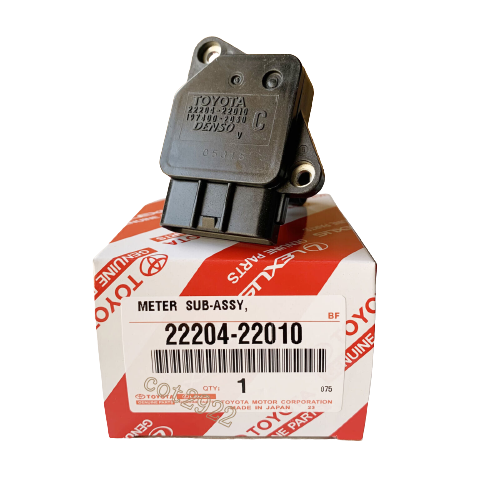
If you experience any of the symptoms mentioned above, it's essential to diagnose the issue before it gets worse. Here's a step-by-step guide to diagnosing a failing MAF sensor:
Simple Checks
- Visual Inspection: Examine the MAF sensor and its wiring harness for any visible damage, loose connections, or debris. Ensure that the sensor is properly connected.
- Clean the MAF Sensor: Sometimes, a dirty MAF sensor can produce inaccurate readings. Carefully remove the MAF sensor and clean it using contact cleaner spray.
Electronic Checks
- Check for Diagnostic Trouble Codes (DTCs): If your vehicle was built after 1994, it should have an OBDII port. You can connect an OBDII scanner to it and download any error codes. Common codes associated with MAF sensor issues range from P0100-P0109 and P2096-P2022.
- Perform a Voltage Test: Use a multimeter to check the MAF sensor's voltage output. With the ignition key in the "on" position and the engine off, probe the sensor's connector. Refer to your vehicle's service manual for the specific voltage values.
If you are unable to diagnose the issue or if the problem persists after attempting the above steps, it's advisable to consult a professional mechanic. They have the necessary equipment and expertise to diagnose and replace the MAF sensor if needed.
Specialist Checks
- Airflow Test: If voltage testing doesn't yield conclusive results, you can perform an airflow test. This involves measuring the actual airflow into the engine and comparing it to the MAF sensor's readings. A professional mechanic or service technician can perform this test.
- Replacement MAF: You can perform a substitute test by temporarily swapping the MAF sensor with a known-good unit. If the symptoms disappear, it's a strong indication that the original MAF sensor is faulty. This will obviously require another MAF unit and the services of a specialist or mechanic.
Choose Olathe Toyota Parts Center For Your OEM MAF Sensors
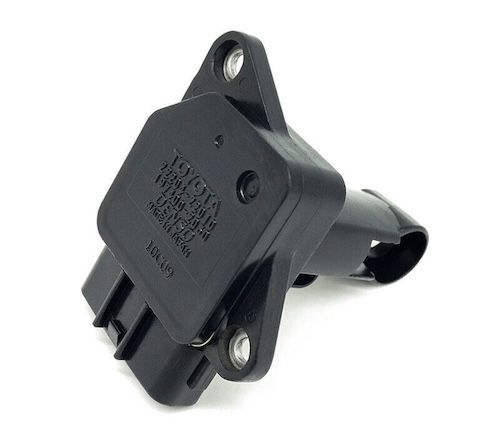
The modern MAF sensor is an integral part of your engine. Knowing how to diagnose it can save you time and money on labor charges. Using an OEM-spec replacement part is the only way to ensure your Toyota continues performing as the manufacturer intended.
For all your genuine OEM Toyota and TRD Performance parts, Olathe Toyota Parts Center has you covered. As part of a Toyota dealership centrally located in Kansas City, we carry a very large supply of parts, including MAF sensors. And, we ship quickly to both the east and west coasts.
With over 15 years in business and helpful online tools like our VIN decoder, our team is ready to help with whatever your Toyota needs. You can also contact us here if you have any questions.