

All You Need To Know About Toyota 4-Wheel Drive
Calling all four wheel drive Toyota Tacoma, 4Runner, Tundra, and Lexus GX owners - ever feel like looking at your center console or overhead panel feels like staring at the cockpit of a fighter jet?
What exactly do all those buttons - A-TRAC, Crawl Control, MTS, and center lockers - actually do? More importantly, how do you use them without accidentally damaging your drivetrain?
Be ready for your next overland adventure (or just your next winter commute) by learning the ins and outs of your Toyota 4 Wheel Drive system. We'll join The Car Care Nut to dive into the mechanics of Toyota and Lexus 4WD systems, decode the off-road tech, and cover some essential maintenance tips to keep your rig running.
The Basics: Part-Time vs. Full-Time 4WD
Before pushing any buttons, you need to identify which type of system your vehicle has. The core layout of both Part- and Full-Time systems is essentially the same: engine power flows through the transmission into a transfer case, which then splits that power between the rear and front differentials via drive shafts.
However, how that transfer case behaves dictates whether you have Part-Time or Full-Time 4WD.
Part-Time 4WD: Tacoma, Tundra, Most 4Runners
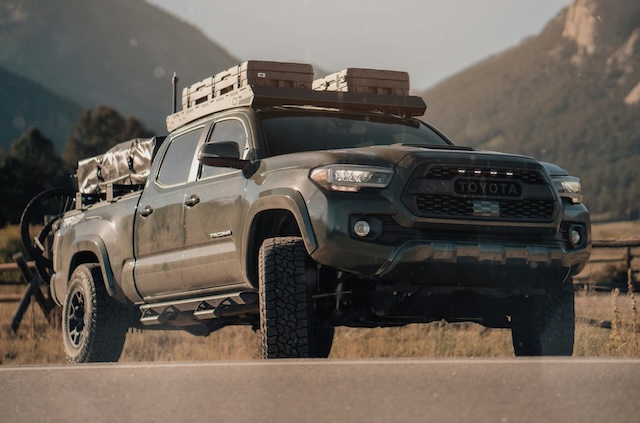

In a part-time system, you are meant to drive in 2-Wheel Drive (2H) for 90% of your daily driving. Power is routed exclusively to the rear wheels, just like a traditional rear-wheel-drive car.
4-Wheel Drive High (4H): When you shift into 4-Wheel Drive High (4H), the transfer case engages the front drive shaft. In older models, this required manually locking the wheel hubs. Modern Toyotas use an Automatic Disconnecting Differential (ADD) that disconnects the axle shafts inside the differential.
The Golden Rule of Part-Time 4H: When you engage 4H, the front and rear drive shafts are mechanically locked together. They must spin at the exact same speed. Therefore, you should never use 4H on dry pavement - here's why:
When you take a corner, your front wheels need to travel a wider arc (and spin faster) than your rear wheels. If you are in 4H on dry asphalt, the tires cannot slip to relieve the tension. This causes drivetrain binding, which can snap axle shafts, blow out differentials, or rip the transfer case apart. Reserve 4H strictly for loose surfaces: dirt, mud, sand, snow, or torrential rain where traction is compromised. You can safely shift into 4H on the fly as long as you are traveling under 62 mph.
4-Wheel Drive Low (4L): This mode changes the gearing inside the transfer case to drastically multiply engine torque. It is designed for off-road obstacles, steep, slow climbs, or pulling yourself out of some deep muck. To engage 4L safely, you must be fully stopped with the transmission in Neutral.
Full-Time 4WD: Lexus GX, Land Cruiser, 4Runner Limited
A full-time system is the ultimate set-it-and-forget-it convenience. You are always in 4WD.
How does it avoid the destructive drivetrain binding mentioned above? The secret is a limited-slip center differential located inside the transfer case. This center differential allows the front and rear drive shafts to spin at slightly different speeds, accommodating the geometry of turning on dry pavement while still providing power to all four wheels.
However, a limited-slip center differential isn't ideal for some off-roading situations. That’s why these vehicles feature a Center Locking Differential button (sometimes labeled as 4H Lock). Pressing this locks the center differential, effectively turning your limited-slip Full-Time 4WD vehicle into a Part-Time 4WD vehicle with no slip. Use this only when off-road.
Decoding Toyota's Off-Road Tech
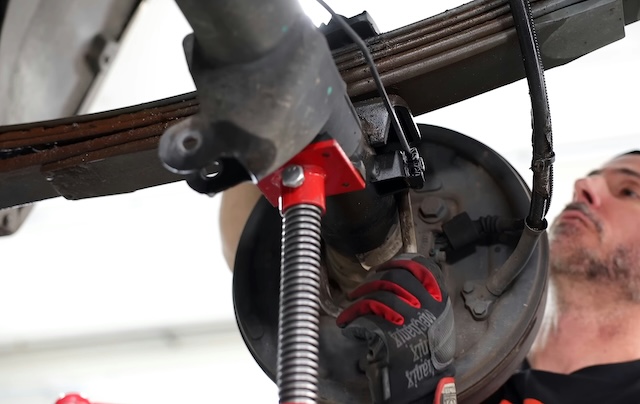
If your Toyota or Lexus is equipped with an advanced off-road package (like TRD Off-Road or TRD Pro), you have an arsenal of software and hardware ready to tackle the trail.
A-TRAC: Active Traction Control
Think of A-TRAC as off-road magic powered entirely by software. Standard open differentials send power to the path of least resistance. If you lift a tire off the ground, all your engine power spins that useless tire, and you go nowhere. A-TRAC uses wheel-speed sensors to detect which tires are spinning freely. It then aggressively pulses the ABS brakes on those specific wheels, forcing the mechanical power over to the tires that actually have grip. It’s highly effective and works automatically once engaged.
Crawl Control
Crawl Control is essentially low-speed, off-road cruise control. Designed for use in 4L when you are deeply stuck, this system takes full control of the throttle and brakes. It actively monitors wheel slip and adjusts power output to each individual wheel to slowly dig you out of sand, deep mud, or over large rocks. You simply steer and let the computer do the heavy lifting.
MTS: Multi-Terrain Select
MTS allows you to tell the truck's computer what surface you are driving on (e.g., Mud/Sand, Loose Rock, Moguls). The system then adjusts the throttle response and traction control sensitivity to optimize grip for that specific environment.
Lockers: Electronic Locking Differentials
While A-TRAC and Crawl Control use brakes to mimic traction, a physical locker is the old-school, bulletproof solution.
A rear locker physically pins the two rear axles together, forcing both rear wheels to spin at the exact same speed, regardless of traction. If one wheel is hanging in the air, the grounded wheel will still push the truck forward. Lockers are the ultimate get-unstuck tool, but like Part-Time 4H, they should never be engaged on dry pavement or during high-speed maneuvers.
Essential 4WD Maintenance Tips
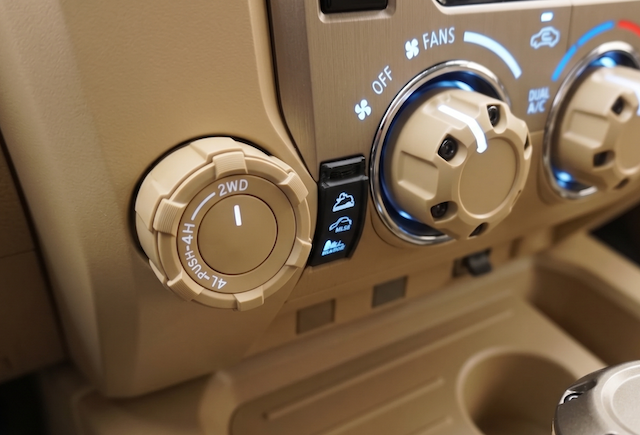
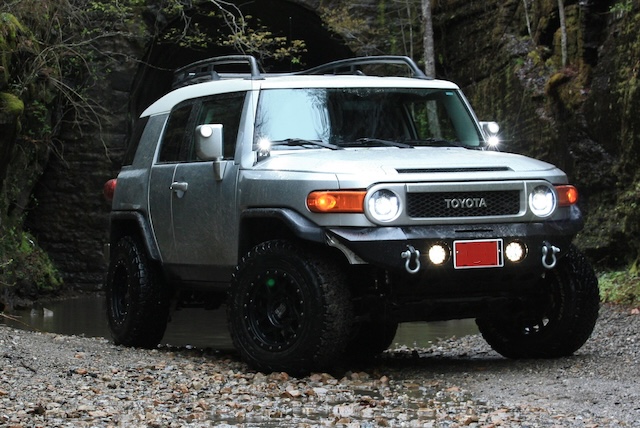
Toyota vehicles are renowned for crossing the 200,000-mile mark with ease, but the 4WD system requires specific, simple maintenance to get there.
- Exercise the Actuators: The electric motors that shift your transfer case and engage your lockers will seize if left unused - a common and expensive repair. Once a month, find a straight stretch of dirt road (or slick pavement in a downpour) and shift into 4H for a few miles. Periodically stop, shift into Neutral, and engage 4L and your lockers just long enough to ensure the motors move, then disengage them. Use it or lose it!
- Fluid Changes: Your front differential, rear differential, and transfer case all require gear oil. Faithfully change these fluids at the mileage intervals your manual recommends. If you frequently tow or off-road, maybe even more frequently.
- Grease the Driveline: If your drive shafts have Zerk fittings, hit them with a grease gun every few oil changes to keep the U-joints and slip yokes happy.
- The Tire Rule: This is critical, especially for Full-Time 4WD owners. Your tires must match in brand, model, and size. Because the system constantly measures wheel speeds, mismatched tire diameters (even a difference of 1/8th of an inch in tread wear) can cause the center differential to overwork, overheat, and eventually fail. If you experience an unrepairable blowout on an AWD/Full-Time 4WD Toyota, you generally need to replace the tires in sets.
Keep Your 4WD Toyota Running Right
Knowing how to properly use your Toyota's 4WD system ensures you get home safely - and keeps your drivetrain healthy for decades to come.
If it's time to service your differentials, swap out some worn driveline components, or upgrade your rig with genuine TRD parts, we have exactly what you need: OEM Toyota parts that fit perfectly, work as the manufacturer intended, and are backed by Toyota's warranty.
Our handy VIN decoder ensures you get the right part, the first time. Benefit from our decades of online sales experience, wholesale prices and fast shipping by ordering today!